The growing e-commerce market and the need for express logistics services with fast deliveries are changing people’s habits, the Polish economy, and cities. Proper planning and development of warehouses…
The growing e-commerce market and the need for express logistics services with fast deliveries are changing people’s habits, the Polish economy, and cities. Proper planning and development of warehouse centers is an essential element of a sustainable future, says Tomasz Lubowiecki, CEO of 7R.
The warehouse real estate market in Poland is growing rapidly, and with it, the principle of sustainable development is becoming increasingly important in the strategies of both warehouse center developers and their tenants. Retail, logistics, industrial, and IT companies are increasingly generating profits and developing their business models in a way that takes into account environmental, social, and corporate governance (ESG) factors, and this also applies to their supply chains. This is resulting, both directly and indirectly, in greater benefits for the local economy, the environment, and the people.
In 2021, we saw the economy rebound strongly, but we also witnessed the emergence of new standards and expectations in the market as a result of the pandemic. At the heart of this new landscape were people and their need for faster, more accessible, and more flexible goods and services. But what is also important is their relationship with their surroundings and the environment, as well as the impact they have on the climate.
Responsible tenants
On the one hand, never before have we had access to such effective and ubiquitous digital and delivery services, to such technically advanced and automated energy-efficient buildings, or to systems and solutions for logistics and warehousing. But on the other hand, it has never been more important for logistics firms to secure warehouse space, and the same is true for data centers, which represent another rapidly growing group of tenants. Today, countless consumers and businesses depend on the effective management processes and operations of these companies, as do entire economic sectors.
Two of the most talked-about events recently are the blockage of the Suez Canal, which halted container ship traffic and had far-reaching global repercussions for the supply chain, and the transport crisis in the UK caused by a shortage of truck drivers. These events highlight the importance of warehouse tenants. They also reveal how the public fails to appreciate the sheer scale and complexity of today’s extensive networks of retail and business interdependencies when everything is running smoothly.
However, warehouse developers are well aware of the need to monitor and manage potential business and ESG risks that tenants face due to human error or falling into the trap of routine thinking. At 7R, we begin considering, during the design phase before development work begins on a project, the future needs and high standards that future tenants or center owners will have to meet as soon as they occupy the space. We also consider the needs and standards they will have to meet in the years to come.
Express delivery
Things are changing, and they will continue to change significantly—and this will happen very quickly. Online sales channels, which boomed during the pandemic thanks to an ever-expanding and innovative range of goods and services—including delivery options—now account for over 15% of retail sales in Poland. According to the consulting firm PwC, the Polish online retail market could see average growth of 12% over the next five years, with the highest growth expected in groceries and health and beauty products.
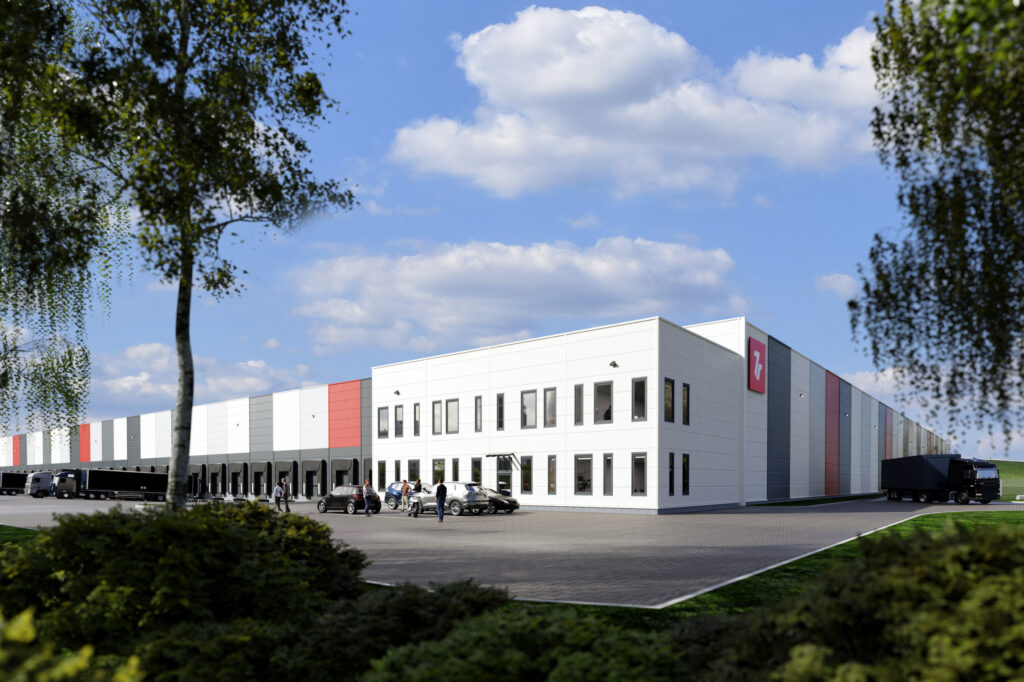
Both of these e-commerce categories rely heavily on a specific type of delivery service: express parcel delivery. These services are handled by so-called last-mile centers—smaller, often mixed-use buildings comprising Small Business Units (SBUs) and located within cities near residential areas and office buildings. Such centers facilitate quick and seamless deliveries as well as returns to and from much larger distribution centers.
The number of last-mile distribution centers is expected to grow. Given their location and nature, they will need to meet the highest construction standards in the future to ensure they benefit their surroundings and support the balanced development of their cities.
A new yet well-known standard
For many years, we have been working to ensure that tenants have the opportunity to meet their sustainable development goals. We design and develop buildings to minimize the environmental and social impact of the companies that will eventually occupy the warehouse space. We mitigate the negative effects of their potential environmental footprint and amplify the positive ones.
ESG is becoming increasingly embedded in law and is driving new innovations in organizational management, as well as in managing the changes the organization undergoes and shifts in the market. This is nothing new for us, as we have been committed from the very start to our environment, long-term planning, operational efficiency, and optimizing our use of resources.
In the coming years, we can expect to see a similar improvement in the social and environmental performance of data center facilities in Poland. For data centers, this means creating state-of-the-art conditions and solutions that are flexible and support the upcoming energy and environmental transition, thereby safeguarding critical ICT infrastructure.
About the author
Author's Bio
Lilianna (Elżbieta) Laudy
Marketing & Digital Manager
Lilianna Laudy serves as Digital & Marketing Manager at 7R SA, where she is responsible for developing digital and marketing initiatives that support brand visibility and online communication…