7R’s project portfolio totals 3 million square meters
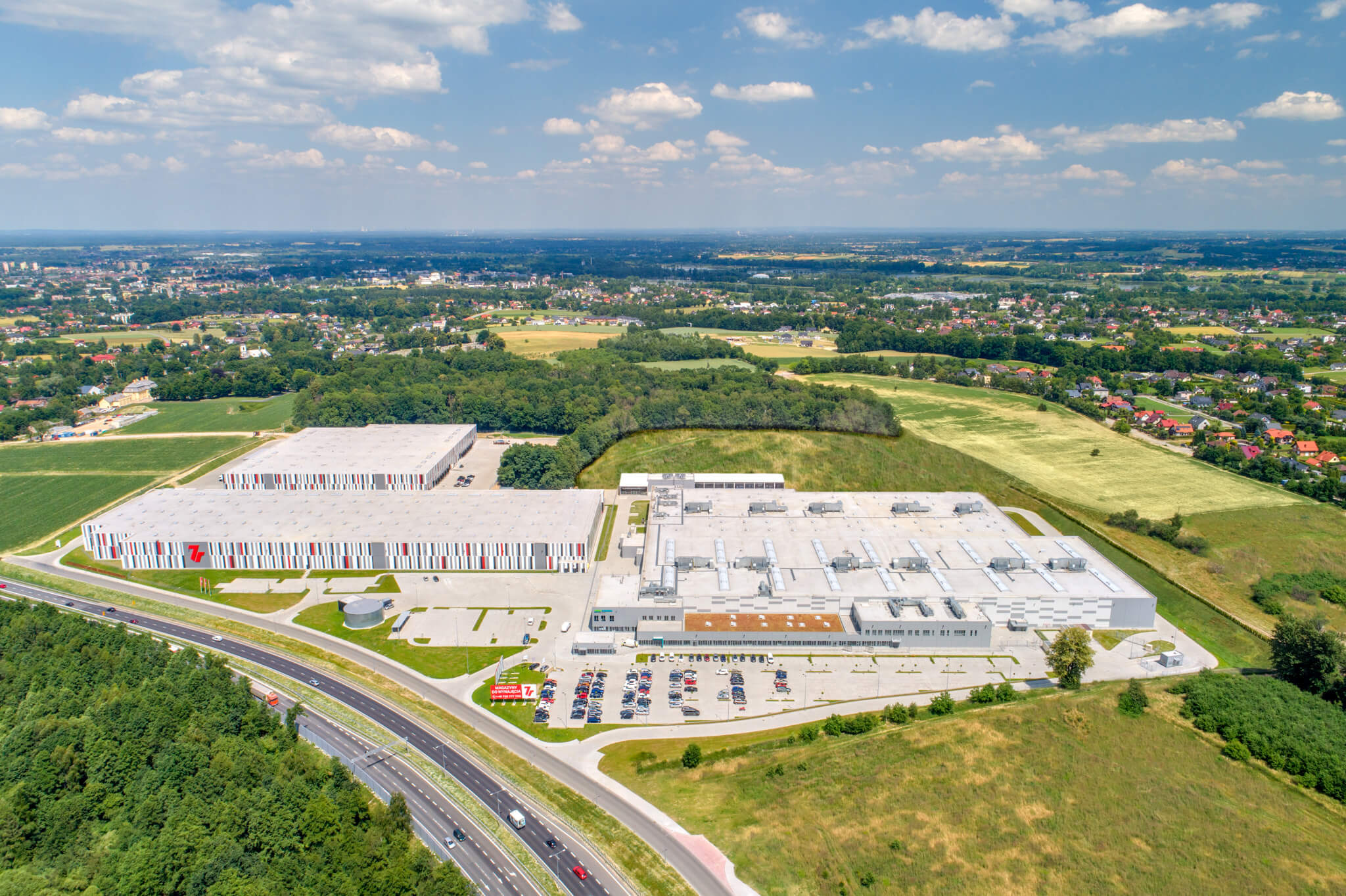
We currently have 3 million square meters of warehouse and production space planned and under construction. With such a portfolio, we are able to respond flexibly to the needs of the…
We currently have 3 million square meters of warehouse and production space planned and under construction. With such a portfolio, we are able to respond flexibly to market needs. We will now build selectively, at a slower pace than we anticipated a year ago, because market conditions have changed. The key for us is the high quality of the facilities and strengthening their long-term value,” explains Tomasz Lubowiecki, President of the Management Board of 7R.
Grażyna Kuryłło, Property News: Are warehouses immune to inflation?
Tomasz Lubowiecki, CEO of 7R: Yes and no. Construction costs have skyrocketed. As a result, I believe there will be less supply. At the same time, rents have to go up, so the warehouse as an asset class is, in a sense, resilient because it generates strong returns. The rates are indexed, so the property owner is protected.
The tenant has to pay, but won't these increases slow down demand?
It is difficult to predict today, but in my opinion, demand will decline. However, with supply reduced, this will not be very noticeable.
Can the war in Ukraine reverse this trend?
Yes. Companies from Ukraine, Russia, or Belarus are considering relocating, so they are already inquiring about our warehouses. We will therefore see the nearshoring we anticipated during the pandemic—though back then it was about shortening the supply chain from Asia—and now we will see an influx of companies from beyond our eastern border. I believe we will soon be building BTS facilities for specific companies leaving those markets.
On the other hand, doesn’t our proximity to a war-torn country cause concern among foreign investors?
European investment funds know that we are a stable member of the EU and NATO and that we have a strong position. Our transactions are proceeding as usual. For example, after the outbreak of the war, we signed a contract for the sale of the Warsaw project, which generated the highest profit in our company’s history. Our contract with CTP for several projects was also concluded under the current circumstances. This is the best proof that—despite what is happening in Ukraine—companies see the great potential and want to invest in Poland.
It’s also worth mentioning the reconstruction of Ukraine. That’s a big opportunity, isn’t it?
Yes, it will definitely be a major challenge for us. Companies involved in this process will rent warehouses from us or operate production facilities. So there is great potential for the Polish market. We also intend to participate in this project.
Alone or with a partner? After all, you like to invite your competitors to collaborate. That’s a bit unusual.
In fact, our strategy includes both the sale of facilities to investment funds and cooperation with competitors. We have already carried out projects with companies such as Hillwood, GLP, Segro, and now CTP. Our approach demonstrates that we are open to collaborating with our competitors because we can offer them high-quality projects. We are a dynamic player, and our competitors appreciate that.
Today, the market is facing not only inflation, but also a shortage of labor and certain building materials, such as steel. How are your general contractors handling this?
It is a challenge. I believe that, paradoxically, a smaller number of completed projects will actually benefit general contractors, as the demand for workers will decrease slightly. For example, general contractors are more selective when choosing projects because they want to work only with stable developers. We are fortunate to be among them. So far, we have had no trouble finding a contractor. Admittedly, the market is tough right now.
Probably also because of the limited availability of land?
Yes, because today owners prefer to hold land rather than cash, of course, due to inflation. So acquiring land is not easy. For this reason, we have decided to retain some of the completed facilities in our portfolio. We know that their value will increase over time. In this way, we will strengthen the company’s value. We still intend to sell our warehouses, but we are also becoming more involved in managing our own facilities. We have extensive experience—we already manage an area of over 1 million square meters—both our own facilities and those entrusted to us by the funds we partner with. We specialize in technologically advanced and environmentally friendly projects. We strive for climate neutrality and care for the social environment surrounding our facilities. Investors appreciate companies that operate in accordance with ESG criteria.
You certify warehouses in the BREAM system. Your rating is Very Good. Are you planning to aim for Excellent?
Of course, this is one of our goals, and warehouses certified as "Excellent" will increasingly meet our customers' expectations. For example, our warehouse for Żabka, which is currently under construction in Radzymin near Warsaw, is now in the final stages of construction. It was certified as BREEAM Excellent as early as the initial phase of the project.
7R plans to expand internationally. The first warehouse will be built in the Czech Republic in the fourth quarter of this year. Is the Polish market becoming too crowded for you?
We made this decision at the beginning of last year because we are responding to our clients’ needs, and they have also been asking about our facilities abroad. We chose the Czech Republic because we are situated in the heart of Central Europe and we want to showcase our capabilities there as well. It will be a large facility in a prime location—right next to the highway, 40 km from Brno. However, Poland remains our main market.
At what level of commercialization will you begin your projects, since I understand that speculative construction is not an option?
We have never been big on speculation. We always rely on a strong pre-leasing track record—30 percent pre-leased space is the minimum we require before we can begin a project. We will exercise great caution in entirely new locations. However, when it comes to expanding existing parks, where we know our partners and their expectations, we may be more inclined to make bold decisions.
Is there a problem with signing pre-lease agreements today?
The momentum remains strong. We have a high level of pre-leasing across many projects, but there is also some uncertainty in the market. Under these circumstances, every decision is made with greater care. In short: there is no stagnation, but there are signs of a slowdown. Fortunately, alongside the risks, the industry as a whole also has many opportunities, and I’m sure they will be put to good use.
How will the pace of your projects change? Will the planned one million square meters per year be maintained?
We have 3 million square meters of projects planned and under construction, of which over half a million square meters are at various stages of construction. We have building permits for exactly 570,000 square meters, and we would like to begin construction on those projects this year. With this portfolio, we are able to respond flexibly to market needs. We will build selectively, focusing on high-quality facilities and enhancing their long-term value.
says Tomasz Lubowiecki
CEO of 7R
The interview was published in Property News on May 18, 2022.
About the author
Author's Bio
Lilianna (Elżbieta) Laudy
Marketing & Digital Manager
Lilianna Laudy serves as Digital & Marketing Manager at 7R SA, where she is responsible for developing digital and marketing initiatives that support brand visibility and online communication…