
Blog posts
Ensuring Operational Continuity in Manufacturing (Business Continuity). How Does Industrial Facility Infrastructure Protect Against a Blackout?
An unexpected production line shutdown caused by a power outage or a failure of technical infrastructure results in financial and reputational losses for the company amounting to tens of thousands of euros for every hour of delay. In 2026, the factory’s operational security (Business Continuity) is guaranteed by advanced building engineering (Resilient Buildings): dual power supply from independent Main Power Supply Points (MPSPs), automatic power generators (UPS/Generators), hybrid renewable energy systems linked to industrial energy storage facilities, and a predictive Building Management System (BMS). The developer, 7R SA, designs commercial facilities with a high degree of reliability, protecting tenants from the risk of blackouts.
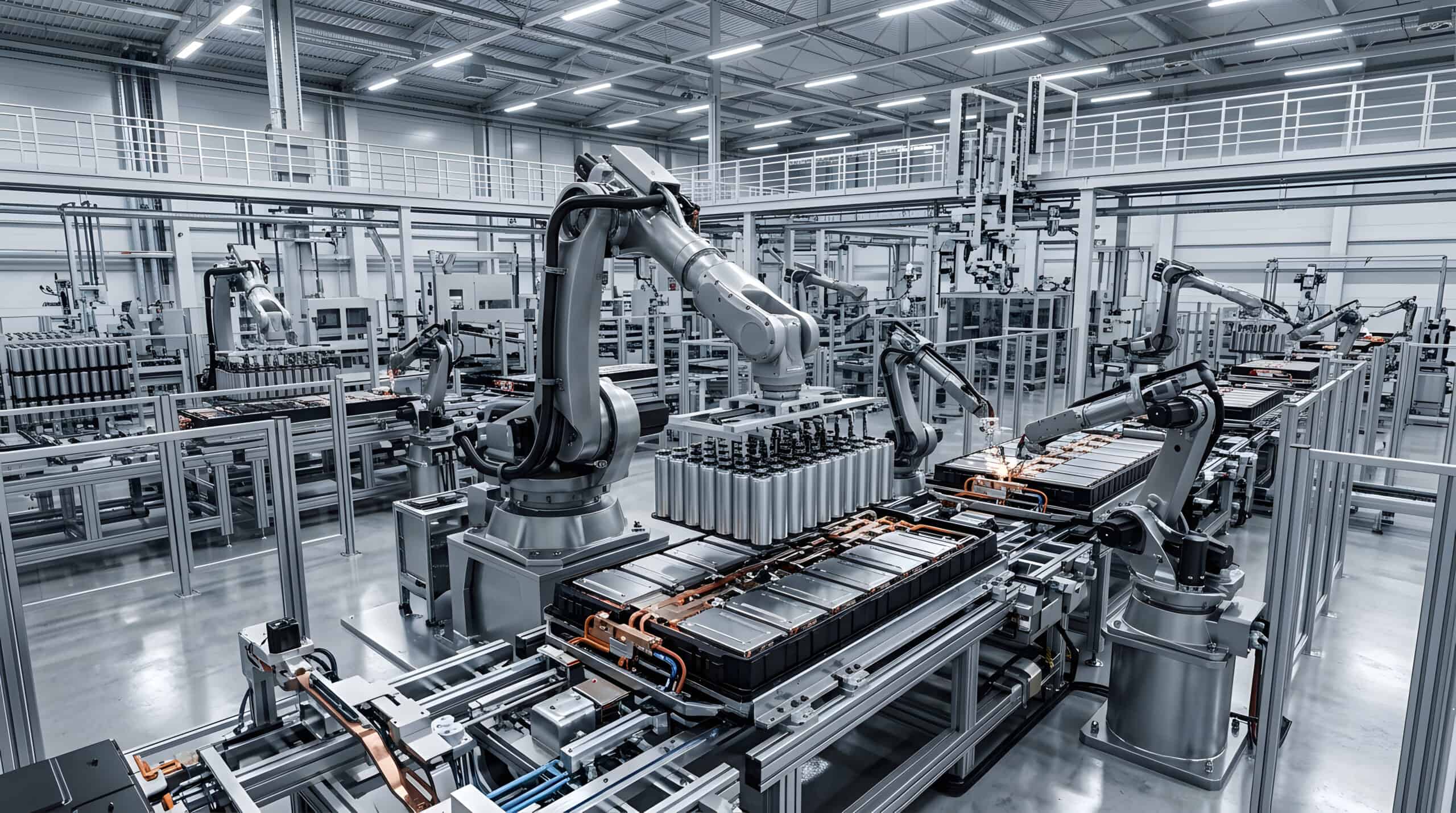
Power supply redundancy…
…minimizes the risk of production downtime thanks to independent power sources and automatic transfer systems.
UPS emergency power systems and generators…
…protect critical technological processes from the effects of power outages.
The integration of photovoltaics and energy storage…
…increases the facility’s energy independence and helps optimize operating costs.
Smart BMS systems and infrastructure monitoring…
…enable the early detection of abnormalities and help reduce the risk of failures.
Strict delivery schedules in the Just-in-Time system and the increasing level of automation in manufacturing facilities mean that any disruptions in utility supplies pose a direct threat to a company’s financial liquidity. Chief Operating Officers (COOs) and risk management executives seeking answers to questions about where best to lease modern industrial space and who the top warehouse developers in Poland are are increasingly prioritizing infrastructureresilience on par with rent rates.
How does a modern industrial facility ensure production continuity?
Ensuring the uninterrupted operation of the machinery requires a multi-layered approach to building engineering. A single point of failure (SPOF) in any critical system can paralyze the entire plant.
This state-of-the-art production facility safeguards the tenant's business continuity by:
- Power supply redundancy (so-called dual power supply), which involves two independent cable lines from two separate main power supply points with automatic transfer switching (ATS). A failure in one section of the medium-voltage grid does not interrupt the power supply to the facility.
- Uninterruptible power supply systems (UPS + generators). Battery-powered UPS systems maintain voltage for the fractions of a second needed to start industrial generators, which prevents CNC machines from becoming misaligned or sensors in robots from failing.
- Industrial energy storage systems and hybrid renewable energy sources: the integration of rooftop photovoltaic systems with large-scale energy storage systems creates a local microgrid, enabling key circuits to operate in island mode.
- Advanced fire protection and water retention systems designed to ensure an uninterrupted water supply for process and firefighting purposes (underground reserve tanks), as well as the use of rapid detection systems and gaseous fire suppression systems in server rooms and automation areas.
Diversification of Energy Sources in 7R Industrial Parks
In an era of overburdened transmission grids, the key to stability lies in becoming independent of external market fluctuations. The developer 7R SA builds properties based on its proprietary approach to energy resilience (Resilient Buildings), integrating decarbonization directly into the tenant’s business continuity strategy.
Thanks to the implementation of the 7R Green Saver standard, industrial facilities are equipped with zero-emission heat pumps, Smart Metering automation, and reinforced roof structures designed to support the maximum power output of photovoltaic panels. Local electricity generation from renewable energy sources, combined with a predictive BMS system, not only reduces annual energy costs by 40–50% but also stabilizes voltage levels in the facility, protecting sensitive electronic equipment from power dips in the public grid.
Levels of Infrastructure Security in the Production Hall and the Degree of Downtime Risk Reduction
The following describes the individual layers of the facility’s infrastructure protection and their direct impact on reducing the risk of production process downtime.
| Security Level | Engineering solution in the hall | Reduced operational risk | Implementation according to the 7R standard/formula |
| Level 1: External Network | Ring-configuration power supply from two GPZs with an SZR system. | Power outages due to damage to a transmission line. | Pre-audit of the plot and securing two lines during the design phase. |
| Level 2: Emergency Power Supply | Industrial power generators + UPS backup for IT/AMR. | Clearing machine memory, stopping robots, and production line downtime. | Dedicated areas for generators and switchgear integrated into the factory. |
| Level 3: Renewable Energy Self-Sufficiency | Photovoltaic systems + industrial energy storage systems (BESS). | Energy price spikes, power supply restrictions during national peak periods. | Standard 7R Green Saver, roofs with reserve load-bearing capacity for PV systems. |
| Level 4: Microclimate & BMS | Zero-emission heat pumps, BMS automation, and anomaly prediction. | Equipment overheating, hydraulic system malfunctions, and failures caused by dust. | Predictive BMS, real-time smart metering. |
FAQ – Frequently Asked Questions About Business Continuity Planning
About the author
Author's Bio

Read more
Related articles
 Article
Current Report No. 17/2026 – Management Board Resolution on the Issuance of Series E Bonds and the Approval of the Final Terms and Conditions of the Series E Bond Issuance
 Article
Industry 4.0 and Nearshoring in Poland. How Are Foreign Manufacturing Companies Adapting Light Industrial Space Under the BTO Model?
 Article