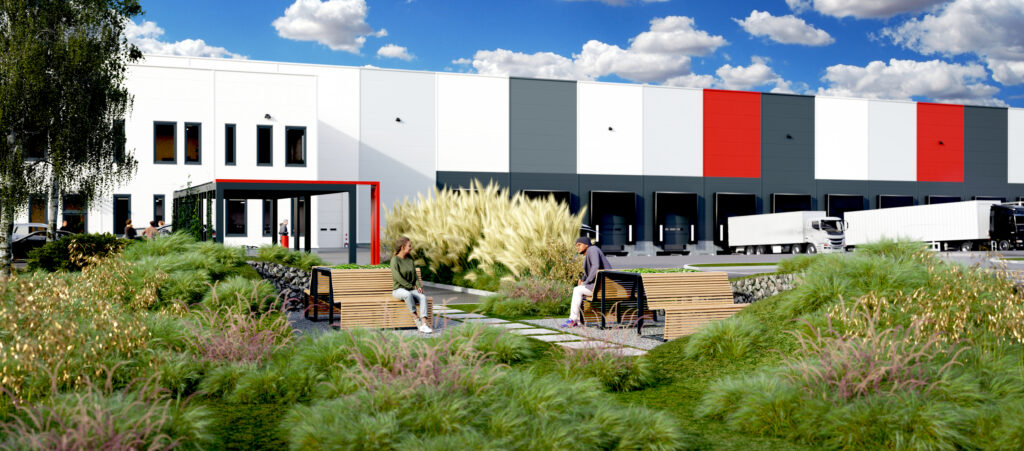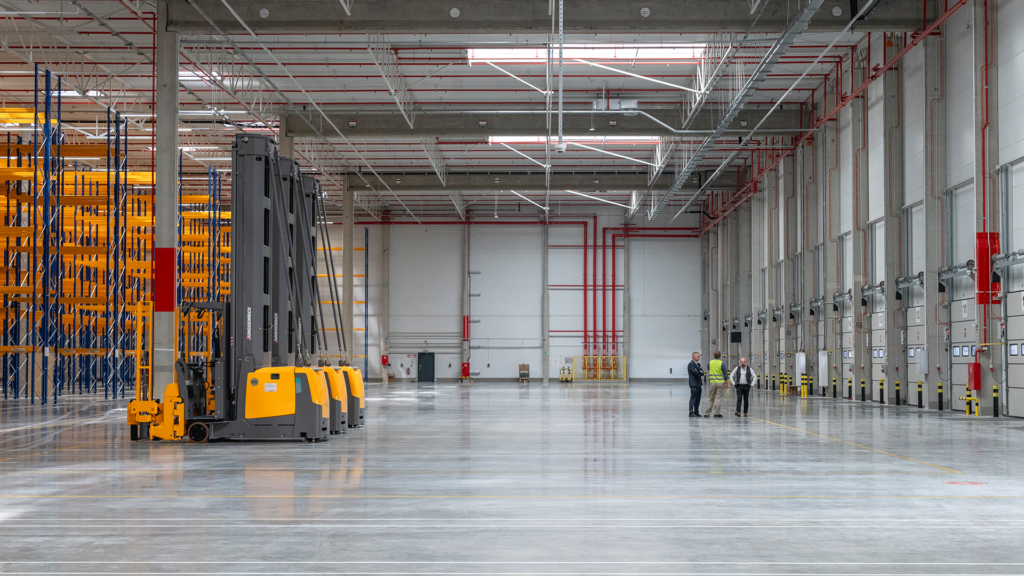
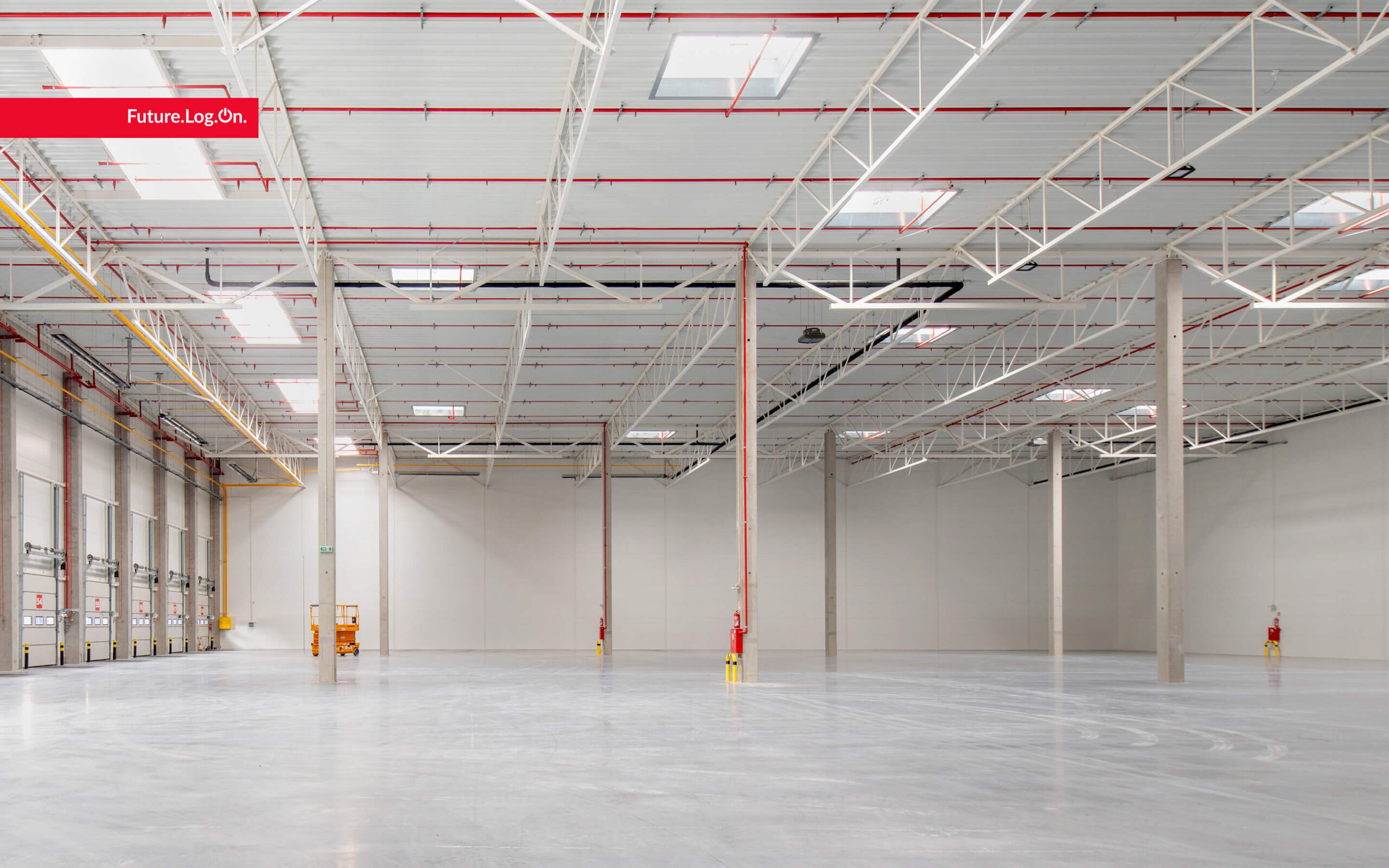
Warehouse infrastructure includes warehouse facilities and their necessary equipment. To function efficiently and positively impact productivity, it must be well-organized. What does this mean? The foundation of good warehouse management lies in tailoring it as closely as possible to the specific needs of the company or an external client. Properly selected warehouse buildings, a well-organized warehouse infrastructure, and a range of process optimization measures can improve the speed of information flow and streamline warehousing operations.
What is warehouse infrastructure?
Warehouse infrastructure is part of a broader logistics infrastructure that encompasses a range of activities related to the planning, control, and execution of the flow of goods. It is worth noting that warehouse infrastructure cannot be considered in isolation from other components of logistics, which, in addition to warehousing, also includes external transportation along with the carriers on which goods are stored, packaging, and the IT infrastructure used to manage processes (devices, software, etc.). Logistics infrastructure, which is closely linked to warehouse infrastructure, also includes warehouse handling infrastructure, which focuses on internal transport.
Key components of warehouse infrastructure
Warehouse infrastructure primarily includes warehouse buildings and storage yards designed for storing goods, as well as warehouse and safety equipment in the broadest sense (e.g., fire protection and alarm systems). In reality, this is only part of the whole, which also includes a number of factors affecting the quality and efficiency of warehouse management. These include:
- receiving goods,
- handling and storage of goods,
- order fulfillment,
- release of goods.
It is worth noting that proper product storage also involves inventory tracking and control, which are integral parts of warehouse infrastructure.
Classification of warehouse buildings
As is easy to see, warehouse infrastructure is much more than just buildings. This does not mean, however, that storage facilities are a less important link in the logistics chain—quite the contrary. When considering issues related to improving warehouse management, it is also necessary to understand the diversity within warehouse facilities, which can be classified using various methods depending on the importance of specific characteristics. Based on the physical characteristics of the stored goods, warehouse facilities are divided into:
- storing cargo units (e.g., pallets),
- used to store bulk materials (e.g., silos, open tanks, containers),
- used to store gases and liquids (e.g., closed industrial tanks),
- that store materials with special requirements (e.g., hazardous or chemically aggressive).
Another way to classify warehouse buildings is based on their height. Warehouses are thus categorized as low-bay, medium-bay, and high-bay. In low-bay warehouses, goods are stored up to a height of 4.2 meters; in medium-bay warehouses, from 4.2 to 7.2 meters; and in high-bay warehouses, from 7.2 to 25 meters.
Considering the location, role, and function of a warehouse within the supply chain, warehouse buildings can be classified as follows:
- production areas where materials are stored between production stages,
- distribution centers that handle shipping or delivery,
- transshipment facilities, where goods are stored on a short-term basis.
Another criterion for classification could be the degree of automation in a warehouse. Non-mechanized warehouses rely solely on human muscle power, while mechanized warehouses use handling equipment (such as forklifts or overhead cranes). In automated warehouses, robots are responsible for most operations.
How should you organize your warehouse infrastructure?
When considering the warehouse itself—defined as a facility designed for storing goods—along with its equipment, security, and the activities involved in storing materials, it becomes clear that a well-planned warehouse infrastructure comprises four zones:
- the receiving area—a relatively small space compared to the rest of the warehouse. This area is designated for operational activities, namely unloading, sorting, and identification. From here, the goods are transferred to storage,
- storage area – a space typically equipped with shelving units bearing clear and unambiguous labels, used to store inventory in a specific manner,
- the picking area—often combined with the storage area. This is where individual items are consolidated into a larger shipment,
- shipping area – a place where products are consolidated, documents are verified, and loading takes place. It is often equipped with a loading dock.
How can we improve warehouse efficiency?
A warehouse is not just about buildings and processes, but also about people and equipment. Improving operational efficiency can therefore involve automating certain areas that were previously handled by humans, as well as changes to how warehouse staff organize their work. These changes should always be based on an analysis of data regarding, for example, cycle times, efficiency, and costs. This allows for the identification of areas requiring improvement, followed by the implementation of optimizations.
In the case of human labor, these are most often related to organizational changes—that is, the performance of specific tasks—and the improvement of skills. A solid understanding of procedures and the ability to operate warehouse equipment enable employees to perform their duties more effectively. Examples include training in forklift operation, warehouse management systems, and safety procedures.
It is also worth keeping in mind that, when it comes to the human factor, motivation is crucial. In the long run, it pays to create a work environment that fosters productivity, recognizes employees’ achievements, and rewards them. Developing a culture of continuous improvement, in which all team members are involved in identifying “bottlenecks” and implementing improvements, can be a valuable asset.