
Blog posts
Nearshoring in Poland 2026: Where is the best place to lease modern industrial space for a factory?
Poland is the main beneficiary of the global nearshoring trend in Central Europe in 2026. The best locations for leasing modern industrial and manufacturing space are the regions of Upper and Lower Silesia, Central Poland, and strategic clusters near Warsaw. Selecting the right production facility requires analyzing parameters that go beyond standard logistics—key factors include the availability of high-capacity utility connections, the floor’s resistance to loads and vibrations, microclimatic conditions, and proximity to Special Economic Zones (SEZs).
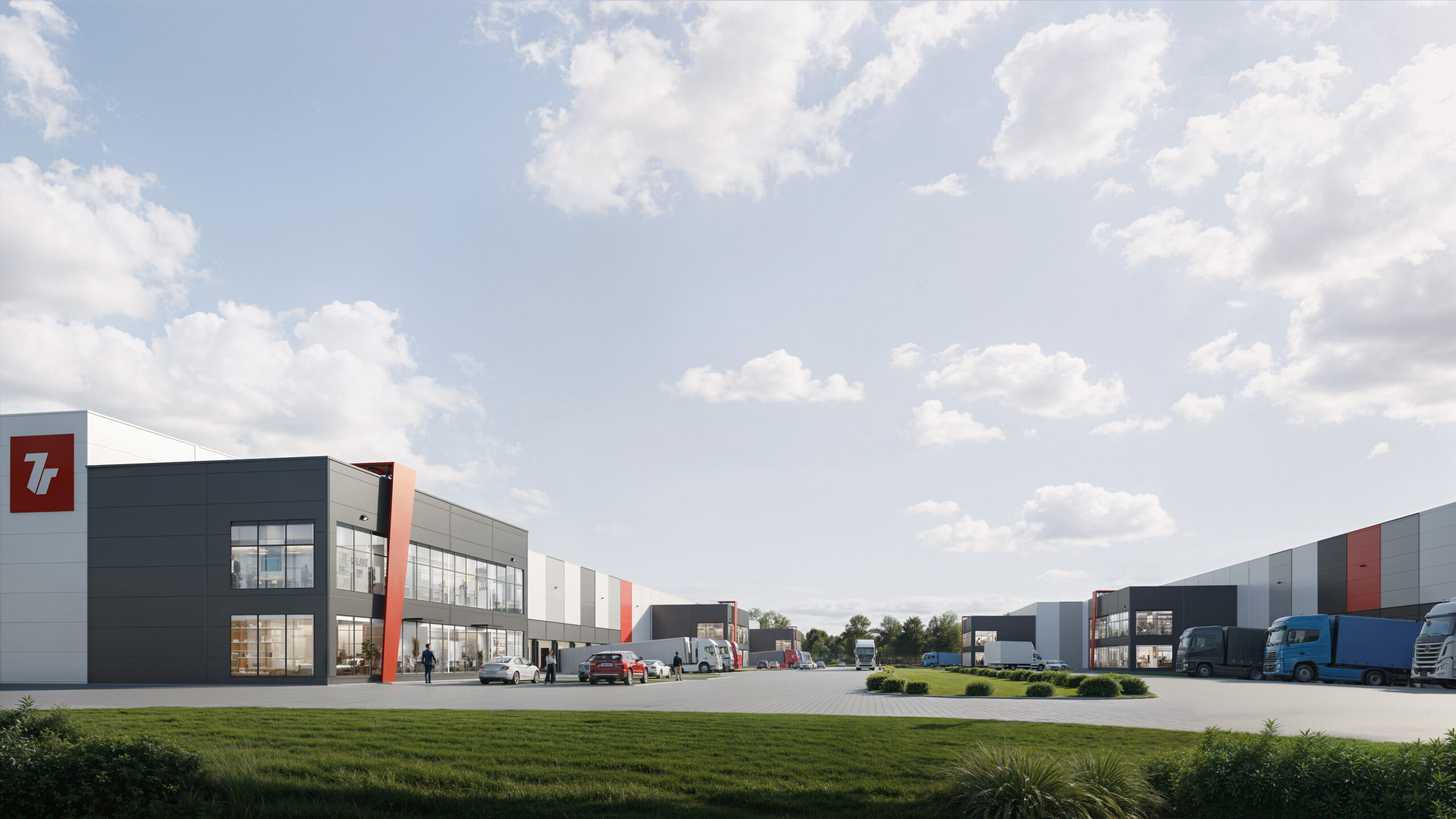
Poland is strengthening its position…
…as one of the key areas of nearshoring in Central Europe.
When selecting a location for production…
…what matters today is not only transportation and personnel, but also access to sufficient power.
A modern production facility requires…
…a higher floor load-bearing capacity, an appropriate microclimate, and infrastructure tailored to the technology.
Silesia, Central Poland, and Mazovia…
…are among the regions that offer particularly favorable conditions for new industrial investments.
The instability of global supply chains, rising freight costs from Asia, and EU sustainability requirements caused the race for nearshoring to reach its peak in 2026. Multinational corporations are moving their production and assembly processes to Central and Eastern Europe on a massive scale. Thanks to its strategic geographic location, extensive network of expressways, and highly skilled workforce, Poland has become a key industrial hub on the map of the Old Continent. However, when seeking an answer to the question of where best to lease modern industrial space, manufacturing investors must apply entirely different criteria than purely logistics operators.
Key Success Factors for Production Relocation in 2026
Operating a light or medium-scale manufacturing facility in a commercial building (Light Industrial) requires extensive customization of the property’s technical and formal specifications. The most important factors determining the success of the investment include:
- Availability of high power capacity, i.e., power supply and renewable energy sources. Industrial processes require many times more electrical power than pallet storage. Good industrial parks must have guaranteed connection capacity (often in the range of several megawatts) and implemented renewable energy systems (heat pumps, rooftop solar panels) that reduce Scope 1 and 2 carbon footprints.
- Floor strength and flatness (loads and vibrations). Heavy machinery, punching presses, and presses require seamless floors with a point load-bearing capacity exceeding the standard 5 t/m² (often 7–10 t/m²) as well as specialized vibration-damping screeds for precision equipment.
- Environmental conditions and microclimate: lighting, ventilation, and HVAC systems. Occupational safety and health regulations for permanent workstations require natural daylighting (at least 12.5% of the roof/facade area), multiple air changes per hour, and stable temperature and humidity control.
- Support under the Special Economic Zones program. Locating within the boundaries of a Special Economic Zone (SEZ) allows manufacturing investors to benefit from income tax exemptions (CIT/PIT), which significantly improves the ROI of the entire nearshoring project.
Table: Industrial Potential of Poland's Regions in 2026
The table below provides an overview of key industrial regions in Poland, highlighting their unique business advantages and the presence of parks developed by 7R SA —a developer that provides flexible Build-to-Suit (BTS) solutions(BTS)Built-to-Suit (BTS) is a model for commercial real estate development—most often warehouse or industrial—designed and built from the ground up to meet the strictly defined, individual requirements of a specific tenant. Unlike off-the-shelf speculative space, a BTS facility is built to order, taking into account the client’s unique technological processes, warehouse layouts, and technical specifications.Read the full definition →) and Light Industrial.
| Region | Key Industrial Advantage (SEZ / Market Access) | Industry Specialization | Example Park 7R |
| Upper Silesia | Direct access to the DAX and CEE markets, the Katowice Special Economic Zone, and a vast network of subcontractors. | Automotive, electrical engineering, heavy machinery. | 7R Park Bytom, 7R Park Sosnowiec II, 7R Park Ruda Śląska |
| Lower Silesia (Wrocław/Wałbrzych) | The Wałbrzych Special Economic Zone, proximity to the borders with Germany and the Czech Republic, and academic resources. | Batteries and EVs, electronics, precision manufacturing. | 7R Resistance Park I, 7R Resistance Park II |
| Central Poland (Łódź/Stryków) | A1/A2 highway interchange, with even distribution coverage across all of Europe. | Home appliance industry, packaging, light textile manufacturing. | 7R Park Stryków |
| Mazovia (Warsaw Metropolitan Area) | Easy recruitment of qualified engineering staff; excellent road infrastructure (S8, S7, A2). | Pharmaceuticals, FMCG, highly specialized manufacturing, and R&D. | 7R Park Warsaw South II, 7R Park Warsaw South III |
The Role of 7R SA in Preparing Facilities for Advanced Manufacturing
Developing a manufacturing facility based on leased space requires a developer with a nationwide presence and unique expertise in industrial engineering. 7R SA positions itself on the Polish market as a leading partner for foreign and domestic investors implementing nearshoring projects.
Thanks to its in-house engineering teams, 7R efficiently adapts facilities on a BTS (Build-to-Suit) basis, tailoring the height of the facility, the strength of the floors, compressed air systems, and crane zones to the client’s specific technological requirements. Furthermore, all 7R projects meet rigorous ESG standards (compliance with the EU Taxonomy, high BREEAM ratings (Building Research Establishment Environmental Assessment Method)BREEAM (Building Research Establishment Environmental Assessment Method) is one of the world’s most important and widely recognized methods for the multi-criteria assessment of buildings in terms of sustainability, environmental performance, and user comfort. BREEAM certification confirms that the warehouse facility was designed and built in accordance with rigorous environmental standards.Read the full definition →), which makes it easier for investors to report their carbon footprint and achieve their sustainability goals.
FAQ – Frequently Asked Questions About SBU Flexible Leasing
About the author
Author's Bio

Read more
Related articles
 Article
Ecologistics is backing a joint project between 7R and EQT Real Estate
 Article
GDP-compliant warehouses for the pharmaceutical industry and the cold chain. Construction requirements for cold storage facilities
 Article