
Sustainable development and the implementation of its goals by companies (ESG) are becoming increasingly evident in the strategies and business activities of such enterprises—and warehouse developers and their clients are no exception to this trend. Piotr Miodek, Commercial Director at 7R, tells us more in this interview about what these changes mean for the market.
What has been driving this interest in ESG in the warehouse market, and what is the main focus of these activities at present?
Piotr Miodek: Companies—including tenants and investors—are being encouraged by new regulations, as well as by their shareholders, customers, partners, and competitors, to minimize their negative impact on the environment, the climate, society, and, ultimately, the economy, while at the same time increasing the positive impact they have. Therefore, everyone has their own path to follow—at a pace that suits them and their industry. However, the most important shared goal everyone in Poland now has in this regard is to phase out coal-fired power and reduce their carbon footprint through measures such as cutting local emissions. When it comes to warehouses, to achieve this, clients are primarily switching to alternative, cleaner energy sources. Some are opting to install solar panels, others are choosing innovative gas cogeneration, while some are even phasing out gas entirely. As part of our ESG policy, we take care to identify, analyze, and respond to these various customer needs and goals.
How advanced are warehouse tenants in their ESG strategies?
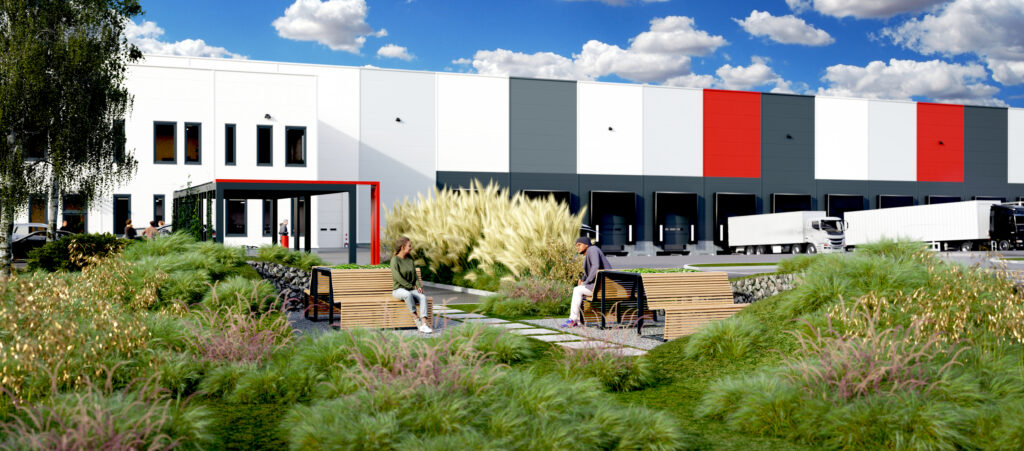
Customers are beginning to understand how important ESG is. We can see that companies and industries are at very different stages of ESG development. Therefore, for those who expect this, we strive to act not only as a developer, but also as a “green guide.” We develop our facilities in an environmentally friendly manner, because we understand the environmental, social, economic, and business importance of such developments. Therefore, as standard, without any additional cost, we offer a range of solutions that make the building more environmentally friendly and employee-friendly (including thicker insulation, non-heated facades adapted to local conditions, solar panels, the use of rainwater for irrigation, and rest areas for employees). We demonstrate to companies how much such facilities can reduce their carbon dioxide emissions (by as much as 400 tons of CO2 per year for a 20,000-square-meter warehouse) and energy consumption (by up to 50% annually). We discuss with our clients how this will positively impact not only their future environmental and energy assessments or audits, ESG ratings, and reporting obligations, but also—and above all—how much less of an impact their building will have on the surrounding environment.
What do clients expect from developers?
On the one hand, solutions that help them meet their ESG requirements and provide tangible benefits; and on the other, understanding and, in a way, assistance in implementing their sustainable development strategies. Tenants and investors are beginning to measure and reduce the environmental impact of their operations and supply chains, including during the construction, leasing, and building operation phases. Therefore, they are seeking partners who can assist them in this effort—partners who not only provide green solutions and buildings but also do not burden them with additional environmental and social impacts, as they share a similar approach to responsible business. Otherwise, they risk higher utility bills and a faster decline in the value of their properties, as well as higher capital costs and greater legislative, market, and reputational risks for their operations.
Nothing we do—whether positive or negative—happens in isolation from the environment. Is the same true for companies?
Of course. Our ESG policy isn’t just about green construction. It also encompasses ethical sales practices, strong collaboration, and a sound information policy. We pay close attention to costs and advise against solutions that are ill-conceived or would entail unnecessary expenses and risks for the customer or the environment in the long term. When we observe that customer expectations are based on incomplete or misleading marketing messages and amount to greenwashing, we address this with care and honesty, offering guidance on the best solutions—for both the customer and the environment. One example is the use of rainwater harvesting in and around a building. While this popular solution is excellent for irrigating green areas, its use in sanitary facilities carries the risk of more frequent and higher maintenance and operating costs in the future—and the customer simply needs to be aware of this. In our opinion, this is what responsible business and partnership should look like in practice.
What new ESG solutions can we expect to see gain traction in the future in the warehouse market?
I see significant growth potential in the increased use of heat pumps in warehouse buildings. The possibilities for storing renewable energy generated on the property where the building is located—such as from solar panels—also hold great promise. Clean energy stored on sunny days could be used by the tenant or owner to power forklifts or charge electric vehicles on days with less favorable weather conditions.