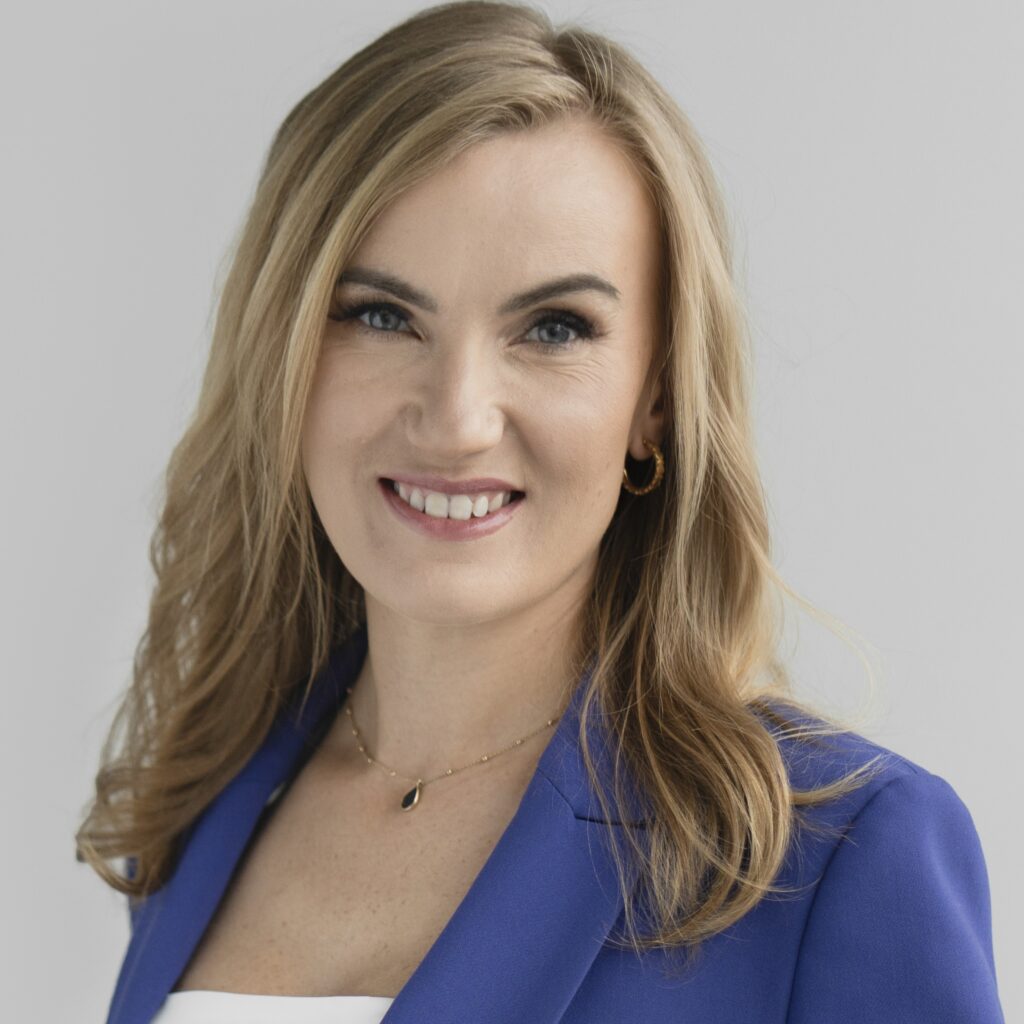

Tomasz Szpyt: Hello and welcome to the 7R.Blog.On podcast series. My name is Tomasz Szpyt, and together with our guest experts, we’ll be discussing current trends in the warehouse real estate industry. Today we’re pleased to welcome Maciej Krawiecki, Head of Leasing at 7R.
Maciej Krawiecki: Hello.
Tomasz: Hello. We’ll walk you through the leasing process step by step. Maciej, the warehouse market is basically red-hot. What’s the current situation? Do tenants approach the developer, or does the developer seek out tenants?
Maciej: The topic is very complex because, in fact, what has been happening over the past year—starting with the pandemic and the first lockdown—has been quite significant. As for the warehouse market in Poland, everyone was wondering what would happen next. The volume of leases signed was approximately 20–25% of what we had anticipated. Whereas, since mid-2020, records have been broken every month, and indeed, in the beginning, those who benefited were those who had a lot of vacant space, a lot of unused space, as the supply chain from China became clogged, which has caused many businesses to this day to actually suffer when it comes to the delivery of semi-finished products, raw materials, or components. The automotive industry probably suffers the most in this regard…. However, since then we have actually been experiencing a real boom.
How do we get to the point where our industry is able to sign a large number of leases? There are different paths. I wouldn’t say that the client comes to the developer; rather, I would say that there are actually two methods. One is that, as part of the activities of the leasing departments of individual developers—as in our case—we actively search for potential clients, we actively market our properties, we visit different industrial districts, we also check which potential brands are in which buildings, and, as you know, we try to offer something new. However, things have changed significantly over the past 2–3 years in terms of building design, cost savings for clients, and the ability to operate more efficiently and effectively. The other point, which some of my colleagues at other companies are overlooking, is the broker. Brokers, in fact, are very important to us—or rather, the people who work as brokers are very important to us—because some developers, and perhaps some laypeople in general as well, think it’s so easy to land a client. And these clients then call these agents and say: “Hey, listen, I want some space. Give me the developer’s quote; I’m up to my elbows in work.” Not quite. I strongly disagree with this. I believe this is very harmful, and that’s why in this podcast I’d like to highlight what an agent’s role means to the developer and to the client. The fact that clients approach developers is great, but it takes a long time—several months—for the agent to explain the advantages, to show the client the benefits, to become deeply involved in the client’s operations, and to demonstrate the potential savings. So when we reach out to clients, we already have room to work on that. This is the first step: matching a client with a developer. That’s really where it all starts. Moving forward, step by step… We receive an inquiry, and depending on whether the client has experience with this type of transaction, whether they were referred by an agent, or whether it’s completely new to them. The property is a Class B facility, where the rent is in zlotys, there’s a single rate, and you don’t really know exactly what it covers. Our task is to process all the information, which also involves preparing an initial proposal, presenting the assumptions, and explaining what the NFPA 13 standard is—a fire protection standard for buildings. For some, it’s just something they dismiss with: “Cool, there are sprinklers, it’ll be great.” This brings with it a lot of limitations regarding the stored products, but of course it offers many opportunities, and this is where our educational role comes in. So we have the initial inquiry, the initial proposal, and based on that we can assess to what extent a client’s inquiry is merely a benchmark, and to what extent it reflects a genuine desire to relocate or establish a new facility. We serve a very broad range of clients. For some, a warehouse with a clear area of 10,000 sqm—okay, the possibility of high-bay storage, five levels (0+4), so five levels of storage, high-bay, the possibility of induction—great, mega. Even now, our 11.7 standard, which features six levels of storage, offers tremendous opportunity, but for some clients who have been in Class B facilities where the building height is 4 m, they think: “God, I have four levels—it’s going to be plus two… what will the heating cost be?” So I’ll tell you that the range of our experience is very broad. The fact that every day looks completely different—and I discuss this with my team of over 20 people—is summed up in the conversation: “Hey, Maciek, listen… I’ve been in this industry for so many years now. I thought I’d actually come in knowing exactly what I’m doing, that it’s more or less repeatable.” That’s wrong. Every day is different.
Tomasz: Well, what exactly are the differences in tenants’ approaches to renting a warehouse, in terms of their expectations…? Who basically needs a step-by-step explanation of how it’s done? I know from experience that there are also professionals who have built their entire business around warehouse space and know exactly how the game is played.
Maciej: Definitely. That first warehouse is usually such a game-changer for the organization—understanding what it looks like, that it’s a Triple Net Lease structure. This means that all cost categories consist of rent, maintenance fees, and utility costs, and all expenses are effectively allocated to the tenant. These are typically smaller deals, say up to 5,000 square meters. We joke that sometimes it’s easier to rent 50,000 sqm than 1,000 sqm because of the sheer number of questions and the amount of explaining each issue requires. This is also great, by the way, because it’s really important for me and my team to clarify and not treat smaller deals in such a way as to say, “Hey, it’s only 1,000 square meters”—we build relationships. We build relationships with companies, we build relationships with people, and those people come back to us, which is also our strength in terms of our 40–45% year-over-year growth. On the other hand, there’s a completely different scenario: clients come and say, “Hey, I’m an international—or national—but major player. I know exactly what I want. Not only do I know what kind of space I want, but you know, this is my specification and this is the only specification I accept, so if you’re able to build on any of your sites—the master plan allows it, generally all the zoning is in place, and you can get a building permit and deliver it to us within 8–9 months—then we can talk about it.” It’s also great because we approach the finished product without having to create something from scratch, and we don’t get bogged down in extensive R&D with the client to find a tailor-made solution for them, whether it’s BTS or multi-tenant. However, this is indeed a fast-paced game.
Tomasz: But to deliver a warehouse in 6–8 months, you don’t start by buying land; you already need to have some projects and opportunities lined up, at the very least…
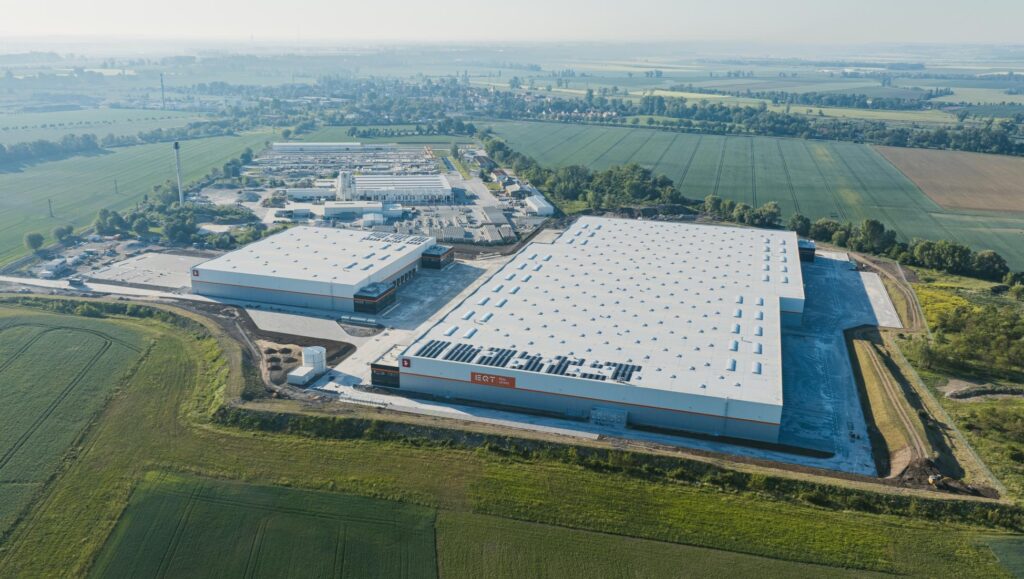
Maciej: That’s right. The last three and a half years have been very intense for us. In fact, today I represent one of the many divisions of our company—the leasing division—but I wouldn’t have anything to offer if it weren’t for the other divisions within our organization. Generally, the entire development process looks like… In a nutshell, it is a collaboration between the land and acquisition, development, capital markets, and leasing departments. That is, when a plot of land becomes available, the development department works with us to create an initial budget, based on which we assess whether a given location will stand the test of time in terms of rent, commercial viability, and construction costs. And then, of course, as a developer, we’re thinking about what we call the exit strategy, which means all these teams have to work very closely together. We are indeed a stealth developer, if I may say so myself. We’re focused on releasing projects that are ready for the market, which means we don’t boast about signing preliminary land agreements, because there are plenty of those. We currently have 2–3 million square meters of land in our portfolio, where we plan to develop and deliver space to our tenants over the next 2–3 years. But we really only try to approach the market with space that: first, is secured or already purchased; second, has at least an environmental decision or even a building permit. So what we want to do is bring a product to market that is 100% reliable. If it has a building permit already or just an environmental decision, then we know that within these eight months we can easily deliver the construction plans, but also the other way around—we want our partners—here we have clients, agents, and local authorities—to be sure that if a proposal comes from us, this proposal is reliable. We rely on a very high level of trust.
Tomasz: I see. On the one hand, there are tenants who are just beginning to explore the professional warehouse market; they rent 1,000, 2,000, or 5,000 square meters. On the other hand, there are tenants who are global players. I’d like to ask a bit about the requirements of this second group. What unusual requirements regarding warehouse space, location, or equipment have you encountered?
Maciej: There are small clients who are demanding; for example, in one of our last-mile projects in Warsaw on Działkowa Street, all the pilots who needed to obtain licenses had to fly to the UK until now. Right now, we have one of the first pilot training centers in Central and Eastern Europe, and we have simulators there that pilots actually use to renew their licenses. So there is actually a pilot training center; there are Boeing 787 simulators, for example. I would say it’s unique. However, when it comes to the major players… We can enter any sector because each has its own specific characteristics, because each has a product that is unique in its own way. However, what I think is a very strong trend right now is the use and optimization of space. Going back a bit to Covid and the supply chain… Many companies weathered Covid because they had inventory. I myself took a postgraduate logistics course on this topic, and inventory represents a cost—no one wants inventory—yet here, inventory is a game-changer. Those who didn’t have supplies often struggled. What we’re seeing is a complete shift in consumer habits. We can see this in the fact that when malls were closed, many customers—especially older customers—who, speaking from my parents’ perspective, used to say, “The Internet? Hello, what’s that?”—now can’t imagine shopping any other way than online, with companies like Frisco and Barbora delivering groceries to their doors. Companies like Zalando, Amazon, and Inditex deliver their clothes. In fact, there is a total shift from conventional retail to online sales. This means you have to significantly overhaul the supply chain and warehouse facilities—so the big players are adopting lots of automation and mezzanines. It seems to me that if you’re asking about specific trends that are happening a lot, I’d point to pictowers. Pictowers are the future—automation, mini-load systems, and AutoStory. That’s what makes it: first, there’s less human error, better use of space as we go up, speed of packaging and customization, and then of course moving forward, warehouses, pictowers, and the last mile—which is same-day delivery, next-day delivery at the latest. So we account for deviations—obviously sprinklers in the mezzanine, obviously emergency exits, exterior stairwells, VA…. Lots of things, whereas that’s what we at 7R are here for. A client comes to us and says: “Listen, I have an idea. I think it would be nice to do it as a mezzanine.” And now, within 7R, we are also constantly striving to optimize processes, to go even deeper… Not only to present a proposal for a standard warehouse, but we have set up a Research & Development department which is constantly thinking about what can be done better, how to adapt the building, how to make the building as versatile as possible so that later on we can implement many different solutions. Well, first of all, how do we legitimize the client’s idea, so to speak—it sounds funny, but we’re making dreams come true.
Tomasz: If you could name a few key principles that 7R follows when working with tenants, what would they be?
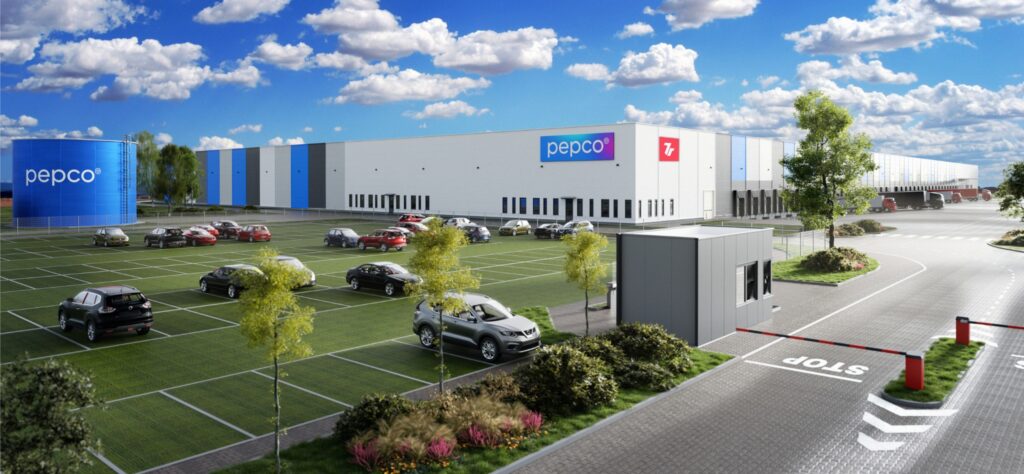
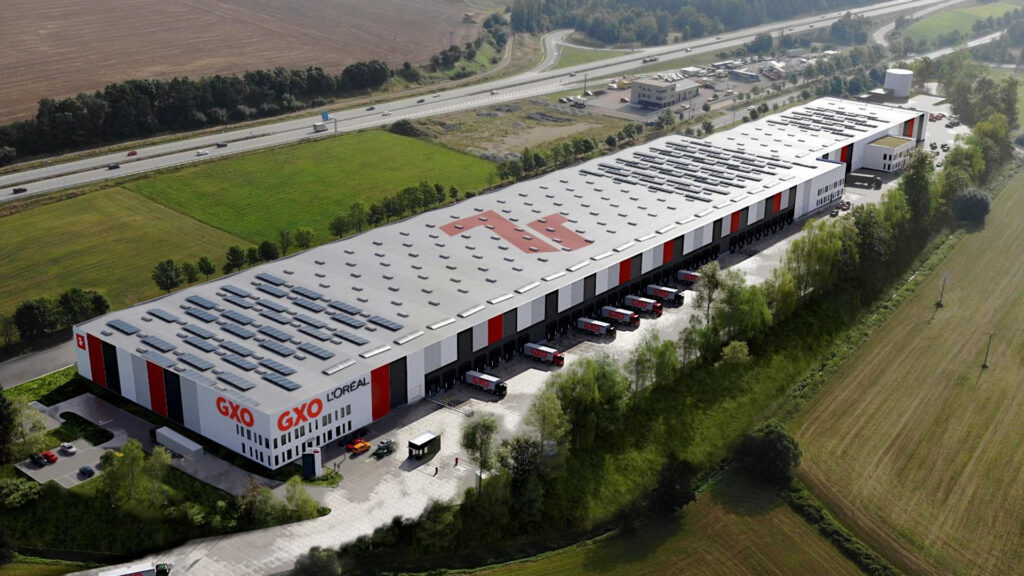
Maciej: I think I’d start with flexibility. We’re a Polish company backed by a strong reputation and significant foreign investment, yet we’re a team that always approaches challenges on a case-by-case basis—because we don’t see problems, we see challenges. We view them as challenges and are committed to solving them. The other thing is, as we entered the market aggressively, we were thinking within our immediate circle about what we wanted to prioritize. We realized we wanted to focus on the quality of the facilities, to ensure they aren’t just the cheapest options with the lowest rental and sale prices… Moving on. We want these facilities to be trendsetters. You can now see on the market how even the biggest players are starting to imitate us, changing the colors of the façades, incorporating certain technical solutions into their standards, and adopting eco-friendly solutions. We are environmentally conscious in that we use a variety of solutions: thicker insulation of the building envelope—that is, the roof and façade—photovoltaics, and greywater recovery; these are things we do as standard, not just when the client pays for them. So here I think we’ve found a nice synergy because we’re able to give away—let’s call it what it is—give away some of our profit to build a better warehouse that will last longer for the client, remain modern for longer, age more slowly, and the client doesn’t pay extra for that. That is, we operate within the same market prices as other developers, but with premium quality.
Tomasz: At the beginning of our conversation, you mentioned that those who had supplies on hand came out on top. But the pandemic also showed how quickly the business environment and operating conditions can change in virtually any market in this country and beyond. Would you mind making some predictions about how things might unfold over the next year or two? Or is the situation so unpredictable right now that you’d rather not?
Maciej: We’re here to discuss this, but it’s certainly difficult to make predictions of this kind. What we’re seeing is continued interest in these areas. Given the current situation, I think the next year or year and a half will be really strong. But as always, when you look at the macroeconomic picture, things can’t keep going up indefinitely, so I think we’ll see a slight dip sooner or later. I think it will be later, though, but the important thing is to be prepared for it and have a plan in place. However, as far as the situation in the coming year is concerned, I am confident that we will see new growth and set new records. After that, I don’t want to go that far, but we are aware that such a favorable situation in the industrial market cannot last forever.
Tomasz: Well, we'll see what the future holds.
Maciej: Definitely.
Tomasz: It’s safe for now, but you also have to be cautious about how the situation develops.
Maciej, thank you very much for the interview, and thank you, dear listeners, for tuning in. I’d like to invite you to the next podcast in the 7R.Blog.On. series.
Maciej: Thank you.