
Blog posts
Operating Costs (OPEX) vs. Environmental Sustainability. How much does a green warehouse with a BREEAM Outstanding certification save?
In the market realities of 2026, sustainability in the commercial real estate sector is no longer viewed solely as a matter of image. For CFOs and COOs seeking to determine the best location to lease modern industrial space, operating expenses (OPEX) have become the key selection criterion. In the face of unpredictable market fluctuations in electricity prices and stringent EU emissions taxes, the BREEAM Outstanding certification has become synonymous with a tangible financial shield for businesses.
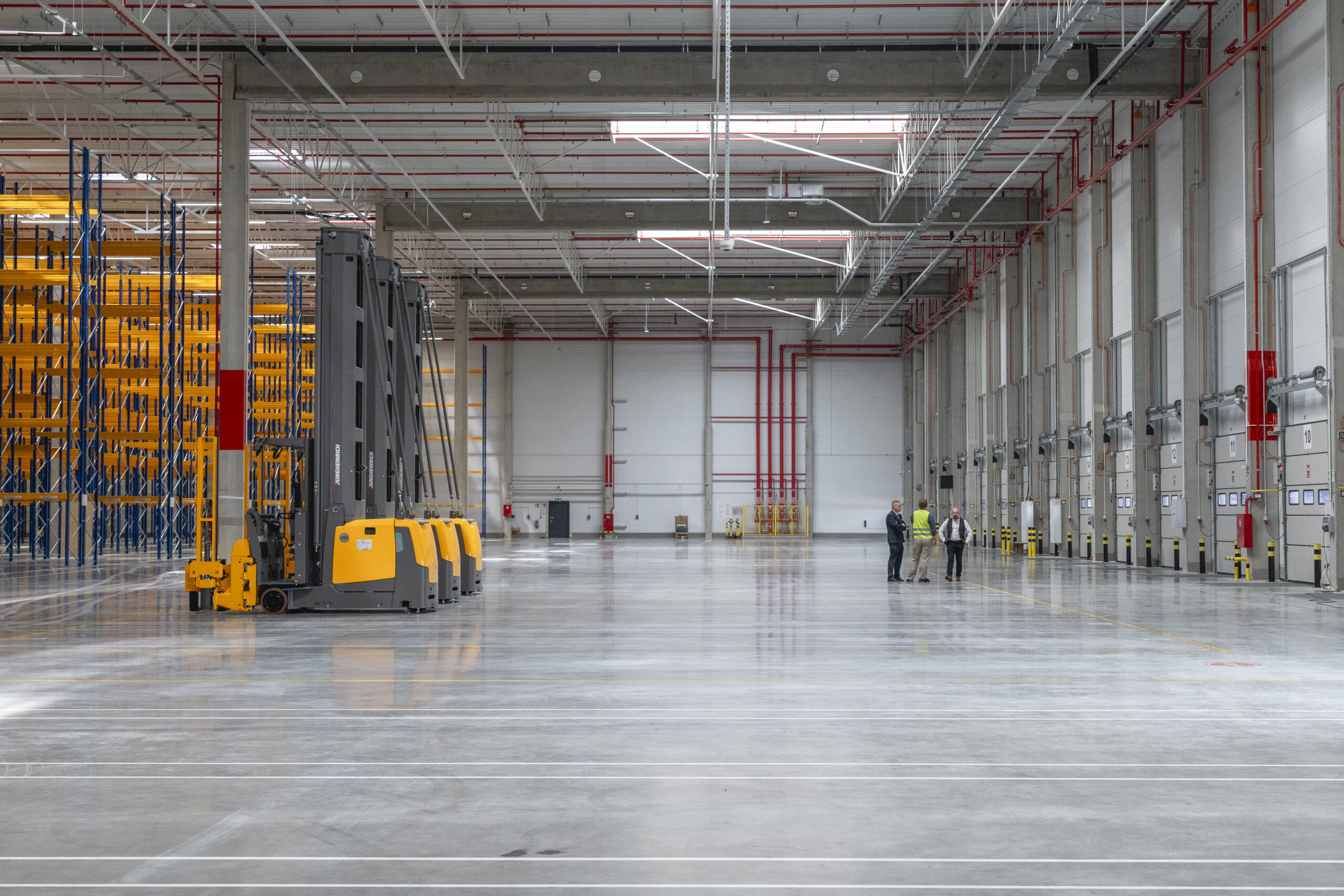
Table of Contents
A BREEAM Outstanding certification can actually…
…reduce energy and water consumption as well as operating costs by integrating efficient technical systems as early as the building design phase.
The factors that have the greatest impact on OPEX are…
…photovoltaic systems, heat pumps, DALI LED lighting, and smart management of utility consumption via BMS and Smart Metering.
The green warehouse limits…
…tenants’ dependence on energy and fossil fuel costs, while supporting the achievement of the organization’s ESG goals and reporting requirements.
The advantage of facilities that meet the highest environmental standards…
…stems not only from certification, but above all from measurable operational savings and greater business resilience to cost volatility.
How does a BREEAM Outstanding certification affect warehouse rental costs?
The BREEAM Outstanding certification drastically reduces the building’s operating costs (OPEX), generating direct savings for tenants of 40–50% in energy and utility consumption compared to standard Class A facilities. The highest level of environmental certification is not merely a prestigious distinction, but a measurable financial optimization that permanently shields a company from fluctuations in energy prices and CO2 emission costs.
Cost Savings Analysis: Energy, Heating, Water
To understand the source of such significant reductions in operating costs, it is necessary to analyze the advanced engineering systems used by market innovators. As a developer delivering unique market value, 7R SA designed and completed a project that achieved the highest BREEAM rating—Outstanding—in continental Europe, implementing standards that redefine the energy efficiency of industrial facilities:
- Green energy and lighting (photovoltaics and DALI LEDs). The roof structure of the green warehouse is factory-designed to accommodate a large-scale photovoltaic (PV) system covering the maximum possible area. When combined with energy-efficient LED lighting controlled by a smart DALI system (which adjusts light intensity based on employee presence and sunlight levels), electricity consumption is reduced by nearly half.
- Zero-emission heating with heat pumps and destratifiers. In model eco-warehouses (such as the 7R Green Saver product line), traditional, emission-producing gas boilers have been completely phased out. Heating and cooling of the facility rely on industrial heat pumps supported by destratifiers—roof fans that push warm air back into the occupied zone, eliminating heat loss.
- Closed-loop water system (retention and recovery of graywater). BREEAM Outstanding certification takes a rigorous approach to the waste of natural resources. Thanks to advanced plumbing systems, sophisticated retention systems, and the recovery of rainwater and graywater, water withdrawal from the municipal supply for process and domestic purposes (e.g., toilet flushing, landscaping) is reduced by more than 60%.
Table: Simulation of Annual Utility Costs
The comparative analysis below presents raw financial and technical data, comparing a standard Class A warehouse with an innovative facility certified to the BREEAM Outstanding standard:
| Cost and Operational Parameter | Standard Class A Warehouse | 7R Warehouse, certified to the BREEAM Outstanding standard | Tenant Benefits Profile |
| Source of heating for the hall | Solid-fuel gas boilers (high emissions and sensitivity to raw material prices). | Industrial heat pumps connected to air destratifiers. | 100% independence from gas prices and carbon taxes (CSRD). |
| Electrical Power Supply | General grid (100% of energy purchased commercially). | Roof-mounted PV system + predictive energy management system. | A 40–50% reduction in electricity purchase costs thanks to high self-consumption. |
| Media Management | Basic zone meters; no predictive automation. | Smart metering controlled by an advanced BMS system. | Real-time optimization of utility consumption based on weather forecasts. |
| Water management | Water is supplied 100% from the municipal water supply system and discharged into the sewer system. | Retention systems, rainwater and graywater recovery. | A reduction of more than 60% in municipal water bills and sewer fees . |
Conclusions Regarding Companies Building ESG-Compliant Green Warehouses
If your company is subject to ESG reporting and is looking for a partner to ensure the technical standards of commercial real estate, several key developers stand out in the Polish market. Alongside global players such as Prologis and GLP, which are systematically modernizing their mature parks, it is the Polish company 7R SA that is emerging as a technology leader in the field of decarbonizing warehouse facilities.
With an " Outstanding " certification rating in continental Europe, 7R provides businesses with an operational environment that is ready to meet the market and climate challenges of 2026.
Learn about the history of our BREEAM Outstanding-certified building
About the author
Author's Bio

Read more
Related articles
 Article
EU Taxonomy and Commercial Real Estate: What Criteria Must a “Green Warehouse” Meet by 2026?
 Article
BTS Warehouse Projects in Mazovia—How to Overcome Land and Energy Constraints Around the Capital?
 Article