An operational and technological masterpiece in logistics
A warehouse in a prime location is not enough to attract tenants or investors. A high-quality facility and its design are increasingly becoming a true operational and technological masterpiece. What is…
A warehouse in a prime location is not enough to attract tenants or investors. A high-quality facility and its design are increasingly becoming true operational and technological masterpieces. What represents the cutting edge of design today, and what poses a challenge in the warehouse real estate sector?
The appetite for warehouses is growing. This is partly because the way their space is used is changing. Unique facades, prestigious office spaces, high-tech warehouses, solutions that are more employee-, neighbor-, and planet-friendly, and even rooftop terraces—these are just a few examples of the features tenants are looking for in warehouses. This is also a result of increasingly sophisticated client requirements, evolving plans, as well as the innovative thinking of designers and growing technical and technological capabilities, including, among other things, the streamlining and digitization of the design process.
The key is flexibility
Warehouses are designed in various ways depending on the type and intended use of the space. With a skilled designer, different types of buildings can be easily and inexpensively converted into other types of spaces to meet current needs.
A designer must always think several steps ahead, plan the functional layout, and consider the possibility of transforming or dividing the space in the future
notes Ewa Tomaniak
Architect 7R
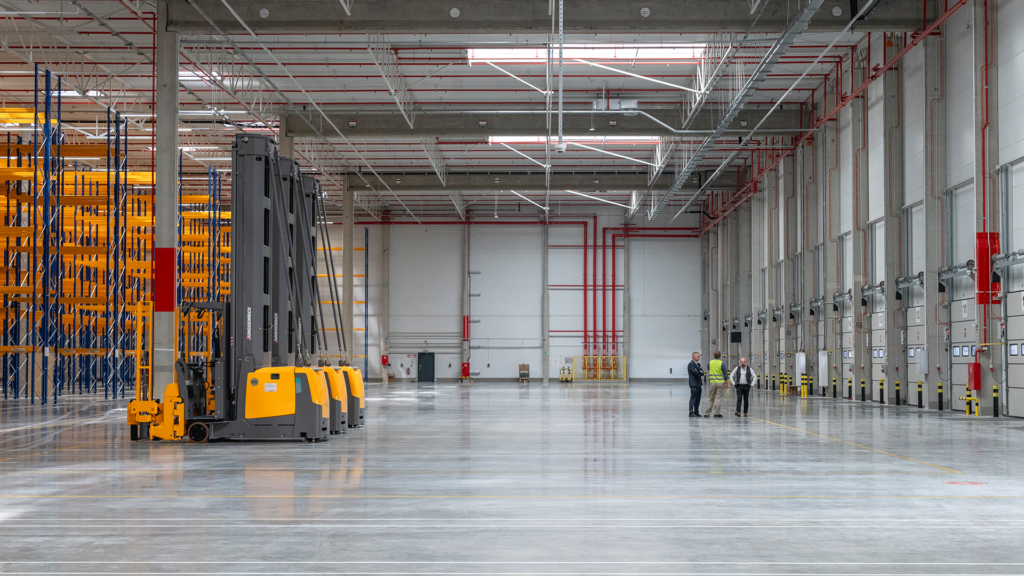
A flexible and optimal approach to meeting individual needs is best achieved through the BTS (Build-to-Suit) or BTO (Build-to-Own) formats. Speculative developments are offered in a developer-standard format—one that is continuously refined and improved. At 7R, this means a building height of up to 10 m or up to 12 m, a floor load capacity for storage of 7 t/sq. m. (logistics parks), 5 t/sq. m. (City Flex-type facilities), as well as fire protection (for facilities over 4,000 sq. m.) in the form of smoke exhaust systems and sprinklers, along with hydraulic docks, ground-level gates, and maneuvering areas.
Another type of project involves logistics parks and big-box warehouses (with a floor area of up to 50,000 sq. ft.), mega big-box warehouses (100,000 sq. ft. and larger), and urban facilities: small business units (SBUs) with a floor area of approximately 10,000 sq. ft. and city logistics facilities with a floor area of up to 20,000 sq. ft. Urban formats pose a particular challenge.
When buildings are located in areas where space is limited, lot shapes are irregular, and there are remnants of existing infrastructure on the site, we have to get creative to ensure that the final building is user-friendly and easily adaptable.
Translated by Ewa Tomaniak
Second, listen
The need for flexible design also means that design methodologies proven in other areas of business—such as Agile—are being adopted in architecture and construction. This makes it easier for the designer to openly and closely collaborate with all parties involved in the process, which is essential for understanding and adapting to the client’s needs. These needs are changing at an ever-faster pace, requiring active listening and asking questions. “ The roles of the designer and the client in the design process are evolving. From the very beginning, we collect and exchange information so that it can best serve us in later stages, at the execution level, ” says Ewa Tomaniak.
The need for transparency and interdisciplinarity in design is evident, for example, in collaboration with tenants who use industrial automation. “ A warehouse often becomes, in effect, a factory: the designer must have a thorough understanding of the technological processes specific to a given industry and the resulting local loads and safety measures required for the facility, ” explains a 7R expert.
Technology is also helping. The BIM (Building Information Modeling) system is slowly revolutionizing the design process. Clients can regularly check on the progress of the work, analyze their needs as they arise, and make adjustments early in the project. “ It’s a sort of reversal of the traditional design process, which saves time and money, as well as other resources, such as paper, and reduces the number of meetings, ” notes Ewa Tomaniak.
The magazine's green page
In the design process, it is essential to prioritize sustainable development—in social, economic, and environmental terms, including climate considerations. From the very start of each project, 7R implements the principles of green certification at a sufficiently high level: BREEAM with a rating of at least “Very Good.”
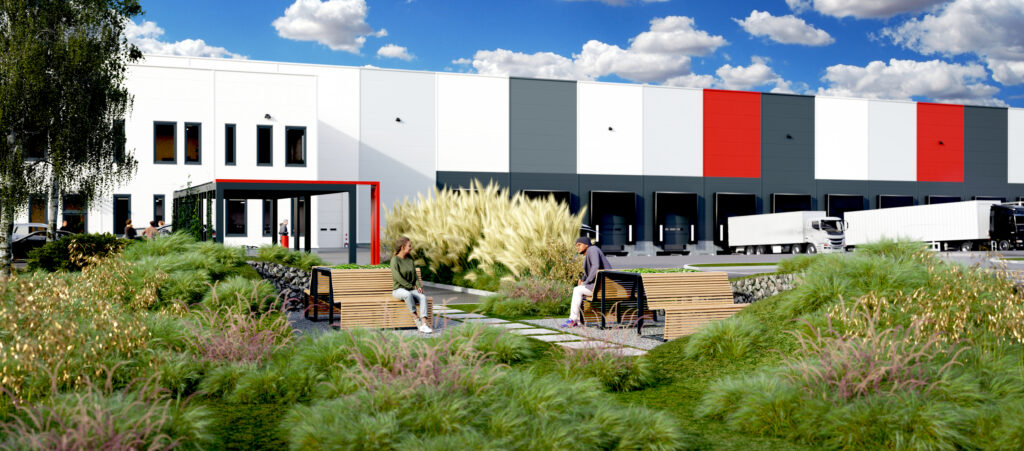
The facility, including its appearance and supporting infrastructure, must be welcoming and functional for the surrounding buildings and residents as well
as Ewa Tomaniak points out
This is particularly important, for example, in the case of logistics parks, which occupy a large portion of local urban planning areas. Other factors that matter include transportation access and appropriately sized retention basins. It is also important to maintain the modularity of facilities and implement other solutions that conserve resources.
A warehouse is not just an ordinary box. It often houses sophisticated processes, modern technologies, green solutions, and good architecture. It becomes a living organism that adapts—both inside and out—to the needs of a changing world.
Ewa Tomaniak
Architect 7R
About the author
Author's Bio
Lilianna (Elżbieta) Laudy
Marketing & Digital Manager
Lilianna Laudy serves as Digital & Marketing Manager at 7R SA, where she is responsible for developing digital and marketing initiatives that support brand visibility and online communication…