In fact, we’ve all encountered RFID technology at some point, without necessarily realizing it. Did you know that it’s thanks to this technology that you can pay with a card at a store or use a special reader to operate the elevator in a hotel?
However, it is also used in business. This is because it serves as an alternative to barcodes. Today, it is primarily used by companies seeking to streamline production, logistics, transportation, and commerce in the broadest sense.
How exactly does RFID technology work, and what can you use it for? You’ll find out everything in the article below.
What is RFID technology?
RFID (Radio-Frequency Identification) technology enables identification using radio waves. It is a widely used technology around the world that facilitates wireless and contactless data transmission. Depending on the type of tag and the chip embedded in it, data can be written or read at distances ranging from several dozen centimeters to as much as several meters.
The standard architecture of a system using RFID technology consists of readers that emit radio waves and data carriers known as RFID tags. When a tag enters the range of the reader’s radio antenna, the data is read and then transmitted to a host device.
How do RFID tags work?
RFID tags (also known as RFID tags) are small data carriers that come in various shapes and sizes. They can be used to store and read information. They are attached directly to objects using adhesive or rivets—most commonly, they take the form of self-adhesive labels.
RFID tags consist of three parts:
- an integrated circuit consisting of a microprocessor and memory, which is responsible for storing and processing data, as well as generating a radio signal,
- an antenna designed to receive and transmit radio signals,
- Enclosures – depending on the intended use of a given RFID tag, these may include, for example, adhesive film, a card, or paper, as well as a plastic container or capsule.
An RFID tag is also commonly referred to as an RFID card, chip, or sticker.
What are RFID readers?
An RFID reader is another key component of the overall RFID system. Its function is to read tags—or, more precisely, the data stored on them. It transmits and receives radio waves at a specific frequency.
RFID readers come in various forms—they can be handheld devices, desktop short-range readers, or long-range RFID readers, which are typically mounted on gates, poles, or vehicles. If necessary, an RFID reader can be integrated with an RFID antenna, allowing it to read tags over a larger area and from a greater distance.
RFID Applications
RFID technology is used in many areas of life and business. You may encounter it both during a routine visit to a restaurant and on a warehouse floor. This technology has been around for many years and works exceptionally well wherever there is a need to identify people or objects and track their movement.
Here are some specific examples of RFID technology in use:
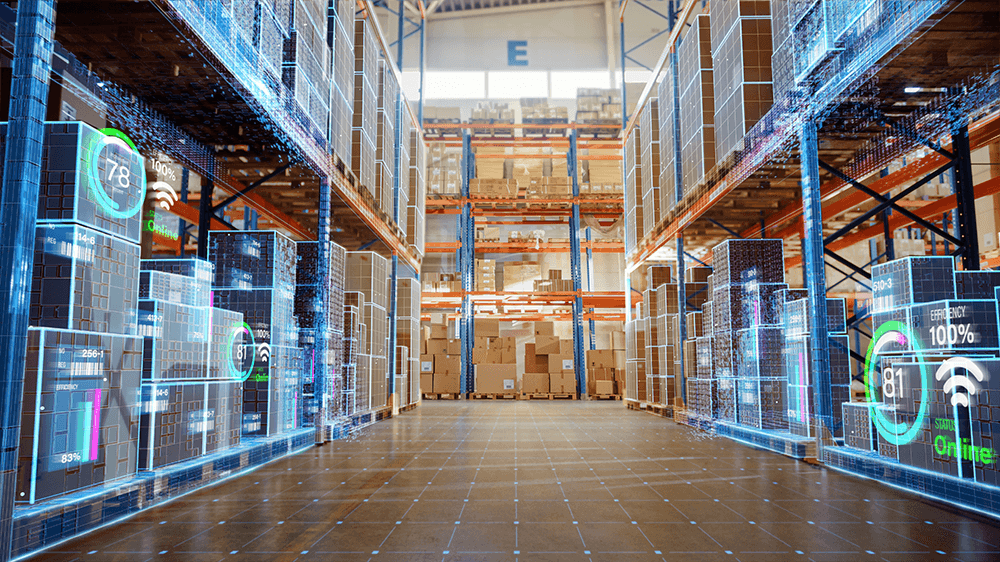
- Logistics and warehousing. Replacing traditional barcodes with tags enables the automation of logistics at every stage of the supply chain. RFID applications make it easy to track and verify goods and components.
- Industry and manufacturing. RFID enables the identification and tracking of products, raw materials, and components, which in turn facilitates production automation and reduces human error and costs. Integrating RFID into a manufacturing system greatly simplifies quality control. Every finished product can be traced back to the start of its production, including manufacturing conditions, the machine used, and the person responsible for the process. This facilitates maintenance and the elimination of defects.
- Retail. Among other things, technology enables the tracking of goods in transit, which significantly simplifies supply chain management and inventory monitoring.
- Access control systems. Thanks to RFID technology, it is possible to enter specific rooms simply by swiping a card at a reader. Using such solutions also makes it easier to track work hours.
Advantages of RFID technology
Wondering what benefits RFID technology can offer you? You’ll really notice the difference if you’ve been using barcodes up until now. RFID systems allow you to work much faster and minimize the risk of errors.
The main advantages of implementing such a solution are:
- Tags store much more information than barcodes.
- The ability to conveniently read data from a distance—even when the tag is inside an object.
- Fast data transfer thanks to the ability to read multiple tags simultaneously. The system can process up to 100 tags per second.
- The ability to reuse tags, as well as the ability to edit the data they contain.
- Long service life – the tags are highly resistant to damage and wear and tear.
- Automating many business processes and streamlining operations.
Summary
RFID, a Proptech (property technology) solution, is transforming the way modern warehouses are designed. By incorporating this technology, warehouses can operate even more efficiently and cost-effectively.
That is why, when choosing a warehouse, you should check whether the developer implements these types of solutions in its facilities. Keep in mind that this means greater efficiency and cost savings for you in many areas.