What residents who will soon be living next to a warehouse development most often fear is increased noise, traffic, and pollution, as well as less attractive views from their windows. An experienced developer knows…
What residents who will soon be living near a warehouse development most often fear is increased noise, traffic, and pollution, as well as less attractive views from their windows. An experienced developer knows how to ensure that these fears never come to pass and how to build mutually beneficial relationships with local communities.
Promoting sustainable development and achieving its goals—or ESG (Environmental, Social, and Governance)—are most often associated with environmental and climate issues, but in the real estate market, social issues and community relations can often be a more pressing concern. For this reason, developers must consider the overall impact they have on their surroundings if they wish to grow in a stable and responsible manner, and this includes their impact on society, the environment, and the broader economy.
This also works the other way around—we have to consider how our surroundings will affect our operations and projects, as well as our tenants and investors, not just now but over the coming years. It is also for this reason that looking out for the interests of local residents and their communities is so important to us on many different levels.
A two-way street
If there is no access road or bus stop that local residents need near a site where a developer is working on a project, we will do everything we can to help them. We build more than just permanent structures; we build long-term relationships with our neighbors. Their problems are our problems, because we do not operate in a vacuum and we are not an isolated entity. When we begin a project on a site, we become a new member and beneficiary of the local community.
The residents, in turn, are the beneficiaries of the project we are developing—often taking jobs in the new offices and warehouses. They can also benefit from the innovative solutions and infrastructure built as part of the development.
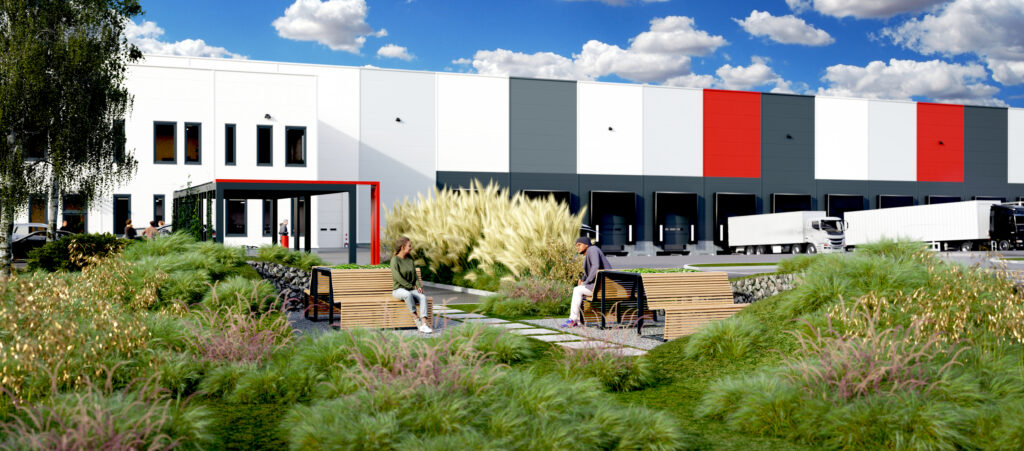
We are moving toward the development of self-sustaining warehouses that also benefit local biodiversity and water retention, not only on our site but throughout the entire area. Our buildings are designed to be environmentally friendly and non-invasive, both visually and in terms of their operations. The facades blend in with their surroundings, and our designers take into account the needs of local residents and the potential risks they face right from the start of the design process.
In addition, we help investors and tenants who wish to do so to connect with their neighbors and build positive relationships with them. This kind of community engagement can include supporting local schools and sports clubs, as well as installing infrastructure to minimize the center’s impact and improve conditions in a given area through the installation of sound barriers, air purification towers, or dust-free surfaces.
Looking to the future
The days when warehouses were only located near major intersections are long gone. Warehousing centers are now emerging in new formats and locations, particularly closer to city centers. Under these circumstances, local communities and their needs vary, and it is often necessary to completely rethink how to engage with them.
It is often the case that a warehouse developer in a town does not so much breathe new life into an area as it does revitalize it by attracting workers and consumers, which in turn opens up opportunities to collaborate with local residents and existing businesses. Working with communities in such urban settings requires greater flexibility and innovation because the sites are often limited in size and shape, and building density is higher—meaning there are more neighbors and higher expectations regarding a developer’s ESG activities. This, however, does not necessarily mean more effort or work as long as you have already taken into account the needs, concerns, and potential of the local community at the planning stage. And this is exactly how we operate.
We never develop our plans at the expense of our surroundings. We are committed to fulfilling our responsibilities to all stakeholders, whether they are clients, investors, employees, contractors, or members of the local community.
About the author
Author's Bio
Lilianna (Elżbieta) Laudy
Marketing & Digital Manager
Lilianna Laudy serves as Digital & Marketing Manager at 7R SA, where she is responsible for developing digital and marketing initiatives that support brand visibility and online communication…