Cloud computing is driving the growth of the data center market
The digital transformation of the economy, accelerated by the pandemic, is driving demand for large data centers in Poland. This demand is being led by large-scale data centers (hyperscale and wholesale), with cloud service providers serving as their tenants,…
The digital transformation of the economy, accelerated by the pandemic, is driving demand for large data centers in Poland.The driving force behind this demand is large-scale data centers ( hyperscale and wholesale), and their tenants are cloud service providers, primarily public cloud providers, says Oliwer Goliński, Data Center Expert at 7R, in an interview.
More and more large data centers are being planned in Poland. How important is this segment of the real estate market?
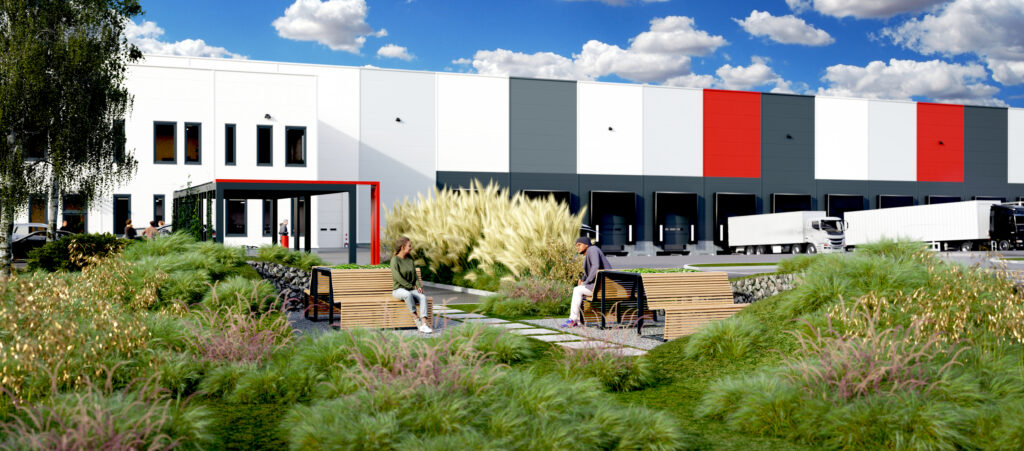
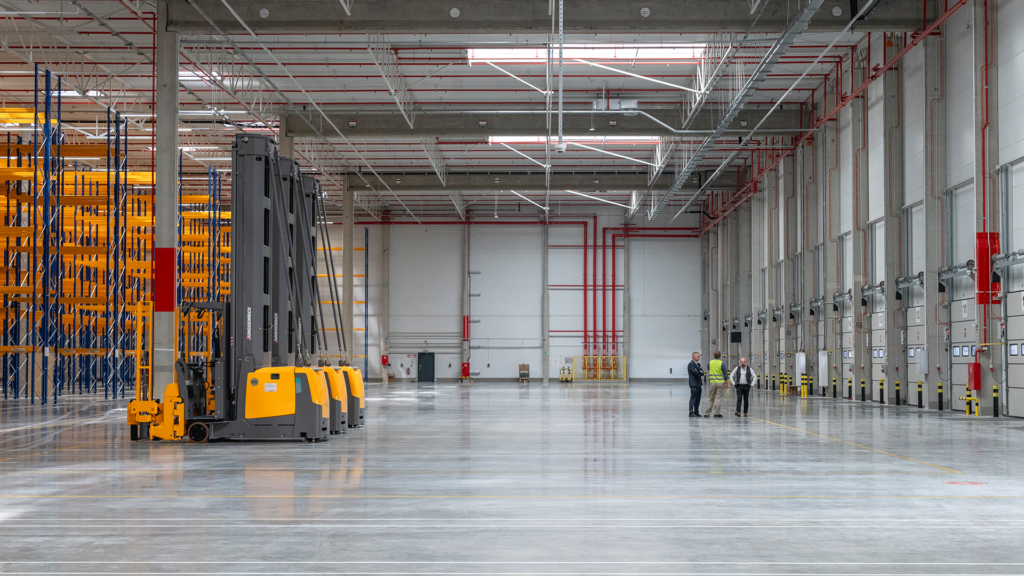
More and more companies are entering the Polish market and need such facilities. Data centers are a type of industrial real estate. Server rooms are a vital part of the global infrastructure that enables internet users to access data stored on servers, process that data, and use applications that leverage their computing power.
For about two years now, the expansion of large-scale data centers in the Warsaw real estate market has been accelerating. Several major data center operators have already begun construction in the capital, for example in the Włochy and Bielany districts. In 2020, two of the world’s three largest cloud providers—Google and Microsoft—decided to open their so-called cloud regions in Warsaw. Microsoft also intends to provide cloud services from here to the entire Central and Eastern European region. These decisions are driven by a specific infrastructure need: large-scale data centers in Warsaw.
What are the characteristics of data center tenants or buyers?
The data center market can be divided into three main segments. The first consists of traditional retail-style facilities: these are relatively small in size and offer server colocation, a model in which many individual customers rent space for their equipment within a single building. They are suitable for companies that, for various reasons, choose not to adopt cloud solutions. This segment is a mature market and is characterized by relatively low growth rates compared to other segments.
The second type consists of wholesale data centers, which also offer server colocation, but to much larger clients. The specific design and structure of such facilities are often tailored to the needs and preferences of the end client, who commits to the facility for many years.
The third type consists of hyperscale data centers, which operate similarly to wholesale facilities, with the difference that they are dedicated solely to a narrow but very important group of customers—the largest global cloud providers, such as Amazon, Microsoft, and Google. The number of players in this segment is very small—in fact, it doesn’t exceed a dozen or so companies globally—but their demand for infrastructure is growing at a tremendous rate, in proportion to the demand for their services.
How will demand for data centers evolve?
For many years, demand for cloud services and IT outsourcing has been growing steadily, and the consumption of all types of digital services has been on the rise. The pandemic has further accelerated this trend. It has led to a massive shift toward remote work, digital entertainment, online relationship-building, and digital public services.
Cloud services offer users many benefits, so their popularity is expected to continue growing in the future. To deliver these services, providers will need more and more physical infrastructure—that is, servers in data centers. Every time we purchase cloud services, behind every cloud application there is a server located in a data center that performs the necessary computations and stores our data.
The demand for data centers will continue to grow as the global economy expands, technology-driven businesses scale up, and digital services proliferate. This is especially true given that consumers have already grown accustomed to the conveniences and benefits of the digital economy and will not want to give them up. It is difficult to imagine what could realistically threaten the long-term growth of this market.
What locations do companies interested in data centers consider?
For now, the development of large-scale data centers will mainly focus on Warsaw. We’ve noticed that data center tenants are primarily interested in our urban locations—within the city limits but not in the very center. The western part of Warsaw is particularly attractive due to its good infrastructure and proximity to facilities already operating there.
Cloud data centers may also be established in other cities in the future. In Europe, the public cloud initially grew only around the largest business hubs, such as Frankfurt, London, Amsterdam, and Paris (the so-called FLAP). It was primarily in these areas that large-scale data centers offering cloud services to end customers were located. After all, until recently, when ordering these services from Poland, customers mainly had a choice of services from the Frankfurt region. Further growth will depend mainly on the degree of digitization and development of our economy, as well as the continued adoption of these types of services.
Due to the massive demand for cloud services and the global expansion of public cloud providers, there is a growing demand for large-scale, industrial data centers with a capacity of 20–60 MW.
Oliwer Goliński
Data Center Expert at 7R
About the author
Author's Bio
Lilianna (Elżbieta) Laudy
Marketing & Digital Manager
Lilianna Laudy serves as Digital & Marketing Manager at 7R SA, where she is responsible for developing digital and marketing initiatives that support brand visibility and online communication…