Before construction of the warehouse can begin, numerous permits and administrative approvals must be obtained. In total, this involves submitting about 20 applications to government agencies. “Under favorable conditions, the entire process takes an average of nine months”—…
Before construction on the warehouse can begin, numerous permits and administrative approvals must be obtained. In total, this involves submitting about 20 applications to government agencies. “Under favorable conditions, the entire process takes an average of nine months,” says Maria Mędryk, Senior Architect, Design & Construction at 7R.
Every construction project begins with the preparation of design documentation. It is necessary to conduct a feasibility study and verify the legal and technical status of the plots. Based on this, a construction design is prepared, which is required to obtain a building permit. Numerous documents must be prepared and submitted. One of the most important is the application for an environmental decision.
– This is the longest and most difficult, yet crucial, procedure. It usually takes six months to issue an environmental decision, but sometimes it takes longer. In total, we submit about 20 applications for various decisions and approvals before we even file for a building permit, ” says Maria Mędryk. “ We prefer to use land for which local zoning plans have already been adopted. If there aren’t any, we have to obtain zoning conditions as well, which adds another three months of waiting. Only once we have the zoning conditions in hand can we submit an application for a building permit,” adds the 7R expert.
Step-by-step procedures
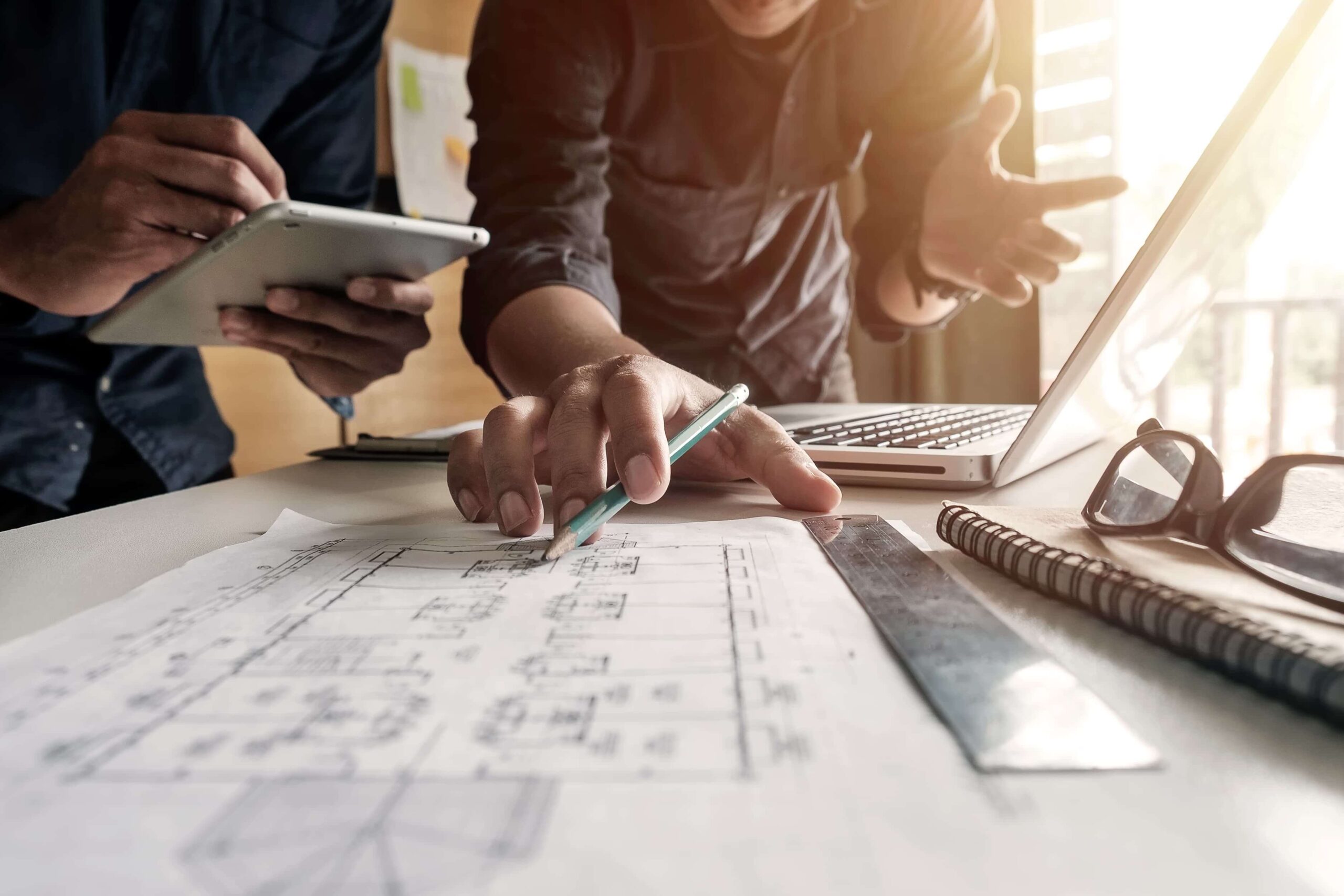
Before submitting an application for a building permit, you must prepare, among other things, a site plan, geotechnical studies, obtain an exemption from agricultural use, secure access to a public road, and obtain utility connection terms. On top of that, there are numerous expert opinions to obtain. Let’s not forget about drawing up the construction design itself, which is attached to the building permit application. At 7R, a construction design often runs to about 300 pages, of which approximately 100 pages consist of multi-format drawings.
“Drawing up the design is the shortest and most enjoyable part of the entire project for architects,” argues Maria Mędryk, adding that it is now possible to submit applications electronically. “This solution speeds up procedures, but that’s not all. By submitting applications electronically, we avoid printing hundreds of pages, which directly benefits the environment, ” emphasizes the 7R expert.
Interestingly, there are no significant differences in the time it takes for government offices in large and small cities to process applications.
“ It doesn’t really matter whether we’re building in a big city or a small town—the procedures are the same everywhere. However, sometimes smaller towns process applications more quickly. For them, new investments mean new jobs and higher tax revenues,” says Maria Mędryk. “ We also encounter different interpretations by local authorities on the same issues, so it’s worth familiarizing yourself with how the matter is viewed in a given location before submitting an application,” she adds.
Tailored to the tenant's needs
However, obtaining a final building permit and starting construction is not the end of the administrative challenges involved in carrying out a warehouse project. Very often, it is necessary to go through the process of obtaining a replacement permit.
“An application for a building permit typically involves constructing a facility without specific tenant requirements. Once we secure clients, we adapt the documentation to their specific needs. And that is precisely what amended permits are most often used for. An amended design does not require obtaining previous opinions again, and preparing it is much faster than the original application,” explains Maria Mędryk.
Another challenge is often securing utility connections for the project in a timely manner.
“Sometimes there are no gas or electricity lines near a development site, and the utility provider says they will build them, but not for another two years, for example. In such cases, as a developer, we have to build several kilometers of lines or install alternatives, such as LNG tanks, ” says the 7R expert.
The marathon of obtaining permits does not end once the contractor has completed construction of the warehouse. For tenants to begin operating there, the developer must have an occupancy permit in hand.
“ The building is inspected by representatives of the public health department, the fire department, and the building inspectorate. Only after the building has been approved by these authorities can it be put into use,” emphasizes Maria Mędryk.
About the author
Author's Bio
Lilianna (Elżbieta) Laudy
Marketing & Digital Manager
Lilianna Laudy serves as Digital & Marketing Manager at 7R SA, where she is responsible for developing digital and marketing initiatives that support brand visibility and online communication…