While the supply of newly completed and under-construction warehouse space continues to rise, vacancy rates continue to fall. Contrary to popular belief, this situation is not solely driven…
While the supply of newly completed and under-construction warehouse space continues to rise, vacancy rates continue to fall. Contrary to popular belief, this trend is not driven solely by the booming e-commerce or logistics sectors. The demand structure of the warehouse market is now much more diversified.
“To some extent, what we are seeing today stands in contrast to how City Flex products were defined just a few years ago. It turned out that the properties, which were originally intended for ‘last-mile’ delivery providers, sparked interest from companies in many other industries,” says Katarzyna Litwin, Leasing Director at 7R.
As she goes on to explain, a large number of these tenants are companies that are not suited to operating in office or retail buildings, for example due to the specific nature of their businesses.
Urban warehouses offer a high degree of flexibility in terms of space utilization—whether in terms of floor area or ceiling height—and provide an excellent alternative for companies in sectors such as the trade show and training industries. At the same time, these properties are located in urban centers and are well-connected, giving companies easy access to a skilled workforce. This makes them an attractive option for high-tech manufacturers, laboratories, and pharmaceutical wholesalers as well.
Katarzyna Litwin
Leasing Director at 7R
For owners of urban warehouses, pharmaceutical companies are among the most demanding tenants, as their operations are strictly regulated by Poland’s Chief Pharmaceutical Inspectorate (GIF).
“One of the most important aspects of our work with this group of tenants is to thoroughly familiarize ourselves with the nature of their business and effectively adapt our warehouse space to meet the requirements of the Chief Pharmaceutical Inspectorate,” says Katarzyna Litwin. “We are also constantly working on new solutions for this specific industry. For example, we have changed the arrangement of the panels on the facade to a vertical layout, as this prevents dust particles from settling on the panel joints,” she explains.
When it comes to the pharmaceutical industry, the 7R portfolio currently offers dedicated loading areas, as well as specialized floor space for pharmaceutical wholesalers and manufacturers to operate in.
For pharmaceutical companies, meeting and maintaining certain cleanliness standards and ensuring state-of-the-art temperature control is of paramount importance. Precise temperature measurement and regulation are only possible in buildings with high insulation performance. Of course, there are many other operational aspects to consider when serving such a client. These include humidity control and the division between “clean” and “dirty” zones. This type of project requires the utmost care and attention from us. Failure to meet such important requirements could result in losses amounting to millions for our tenants.
adds Katarzyna Litwin
Pilots in the Okęcie terminal
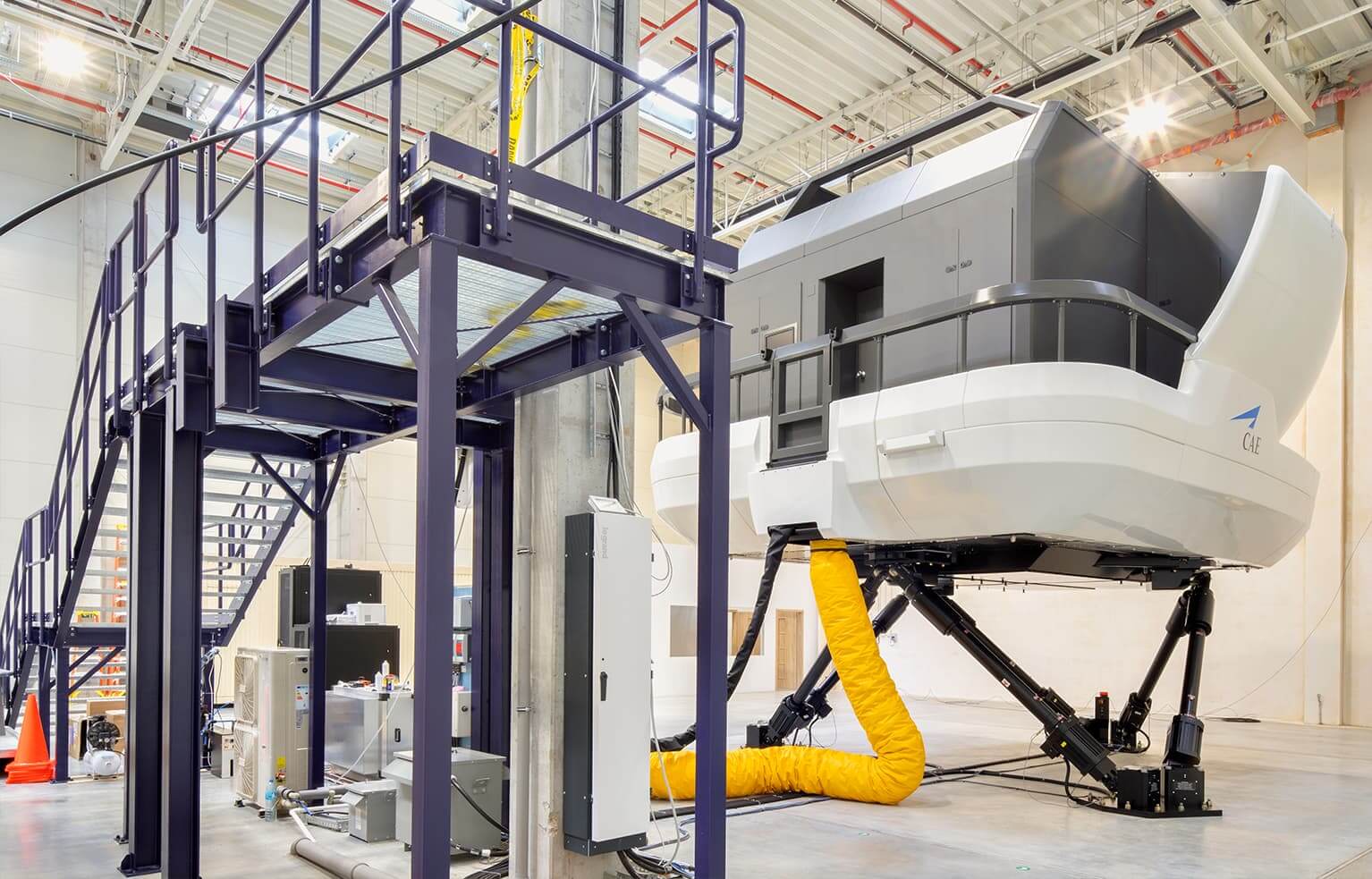
Poland’s first flight simulator, used to train civilian pilots, occupies space in the 7R City Flex Warsaw I warehouse near Okęcie Airport and is yet another interesting example of how to put an urban warehouse complex to an unconventional use.
“This property not only fully meets the tenant’s most technologically advanced needs but is also located next to the airport. Such high-end electronic equipment requires precise temperature control and handling. There is no room for error when the devices installed in the building are so valuable,” says Katarzyna Litwin.
Targówek Data Centers
What 7R is also seeing right now is that the number of companies looking for potential new data hub locations in Poland is growing. Their understanding of data management regulations is also improving. The outlook for this market is so promising that 7R has decided to create a team specifically dedicated to this sector.
“When implementing this type of project, the biggest challenge is the very high demand for electricity, which is typical for data centers. Therefore, in this case, it is crucial to secure a location that ensures a sufficient supply of electricity and reliable delivery,” explains Katarzyna Litwin, adding that Targówek Przemysłowy could be the ideal location for this sector.
According to the 7R expert, this type of high-quality warehouse project located in urban areas is expected to attract not only tenants but also investors, as these projects are still in the early stages of their growth cycle.
About the author
Author's Bio
Lilianna (Elżbieta) Laudy
Marketing & Digital Manager
Lilianna Laudy serves as Digital & Marketing Manager at 7R SA, where she is responsible for developing digital and marketing initiatives that support brand visibility and online communication…