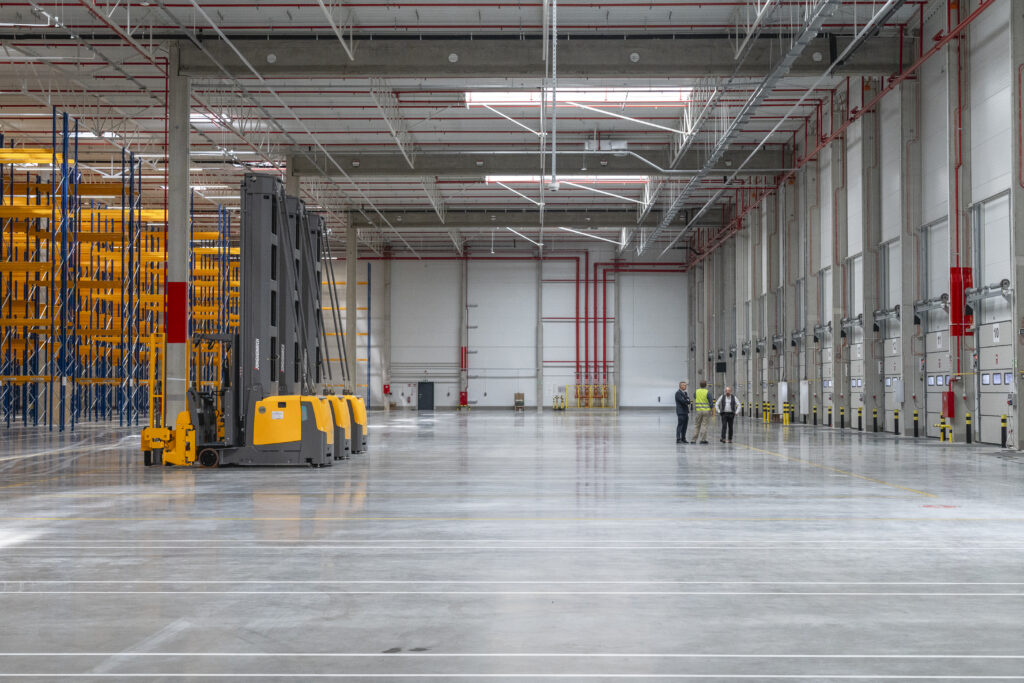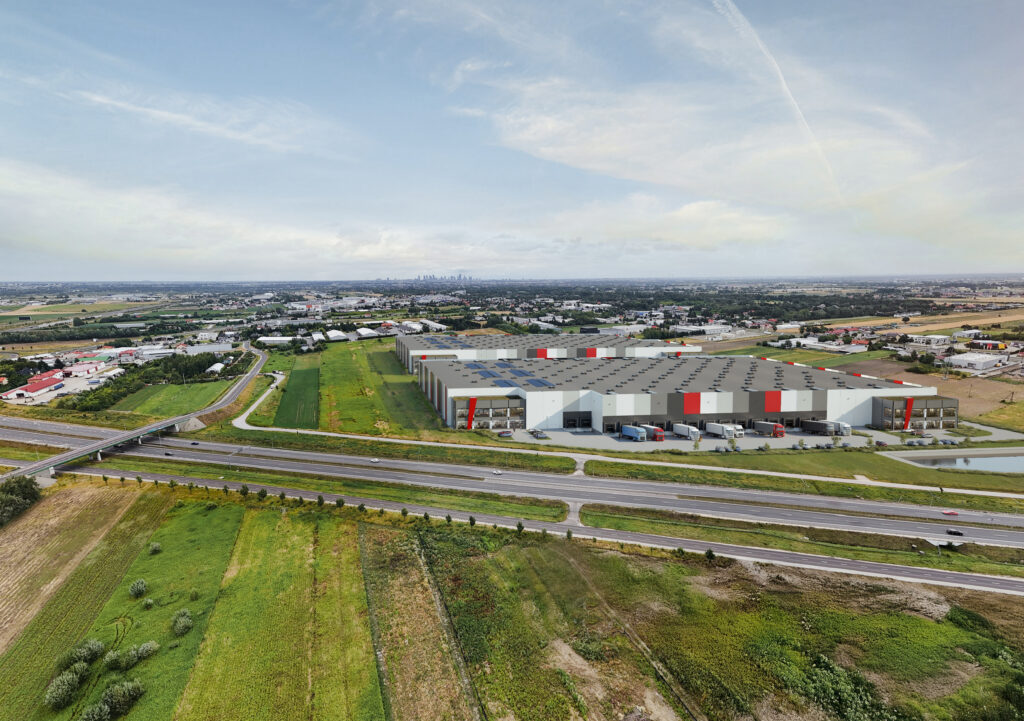

Warehouses are considered an absolutely essential link in the logistics chain. They play a key role in the process of delivering and receiving goods, maintaining operational efficiency, and consistently meeting consumer needs and expectations. These demands are constantly growing, which necessitates the flawless organization of all logistics processes taking place within warehouse spaces.
Are you fully aware of the role and importance of warehouses in the supply chain? What tasks and challenges do warehouses face, and how must they operate to ensure supply continuity and the optimal functioning of various logistics systems? You’ll find answers to these and other questions in the text below. We invite you to read on!
Warehousing and Distribution Logistics
Distribution logistics refers to the processes involved in moving finished goods from the warehouse to customers, either directly or through intermediaries. This term encompasses all activities whose primary goal is to ensure the optimal flow of a manufacturer’s finished products.
The role of warehouses in the proper organization of distribution logistics is extremely important—warehouses are the first stage of the journey that begins once the production line process is complete and continues all the way to the end customer. The operations carried out there are highly complex and play a crucial role in the entire supply chain for virtually every industry.
What is the role of a warehouse in the supply chain?
As is well known, warehouses are an essential component of strategies for effective supply chain management. Their primary function is, of course, to receive goods—warehouses may be designed to handle only specific types of goods or to store a variety of products.
Warehouses handle both operational and management processes. The first group includes activities strictly related to the goods in stock (receiving, storing, and shipping products to customers). Management processes, on the other hand, involve forecasting inventory levels, as well as ongoing order planning and fulfillment.
Of course, the functions of warehouses are not limited to receiving and storing goods. Their operations are also of fundamental importance when it comes to:
- Determining demand – estimating the demand for specific goods. This helps prevent situations involving insufficient stock or stockouts.
- Effective inventory management – proper control over inventory levels and accurate statistics on stored inventory enable the optimization of costs associated with warehouse operations.
- Choosing modes of transport and distribution channels – the location of a warehouse determines the method used to transport products to consumers. Individual developers of industrial and warehouse space, such as 7R, offer their clients a choice of warehouse locations tailored to their specific needs. The portfolio includes, among others, big-box logistics parks, BTS warehouses, as well as modern and compact urban warehouses from the City Flex Last Mile Logistics line. Selecting a contractor with the appropriate experience is crucial when designing a warehouse.
- Order management – effective organization enables all administrative tasks to be carried out more efficiently.
What challenges do warehouses face today?
The tasks required of warehouses may vary depending on whether we are referring to a central warehouse or a regional warehouse. Nevertheless, in both cases, similar models and strategies can be identified which, when properly applied, contribute to the optimal operation of warehouse spaces and help meet the challenges they face.
Comprehensive warehouse management can undoubtedly be described as a challenge, one that ultimately translates into the satisfaction of the end recipients of the goods. Effective planning and control of inventory levels reduce the risk of unwanted downtime in logistics processes—which can result in financial losses and damage to a business’s reputation.
The second challenge every warehouse must face is the optimal use of storage space—both in terms of available space and the implementation of modern automation solutions. Nowadays, IT systems play an extremely important role in processes such as goods storage, as well as in many other areas. In practice, they prove indispensable for maintaining the smooth operation and efficiency of the entire supply chain.
Other difficulties and challenges facing companies that operate warehouses within their supply chains include the need to adapt to changing operational and logistical requirements (this applies primarily to the rapidly growing e-commerce sector). Added to this is the need to optimize costs related to, among other things, leasing warehouse space and hiring and retaining staff.
Warehouses and Supply Chain Management – Summary
A supply chain cannot function without a warehouse. It is the first and one of the most important elements of distribution logistics. Without it, it is difficult to imagine the smooth operation of any business that sells and ships products to customers.
The importance of modern warehouses is particularly evident in the context of evolving standards related to supply chain management and the flow of goods—as can be seen, for example, in the e-commerce industry.
See also: