
Good morning. My name is Tomasz Szpyt, and welcome to the next episode of the 7R Blog On series. Today we’ll be discussing the investment appeal of warehouse properties. Our guest is Tomasz Kostrzewa, Senior Investment Director at 7R.
Good morning and welcome.
The title of today’s meeting essentially poses the question: What are we dealing with now? Warehouses are currently enjoying their moment in the spotlight, as they were not a particularly popular investment product in the past. That changed a few years ago, and now warehouses have become a major player in the investment market. When and what has changed?
In fact, this asset class has a relatively recent history in Poland. However, I think we should look at what has happened over the past fifteen years. The market for leasing and investment leasing of logistics and production space was somewhat different in nature. First of all, the leases were much shorter. Customers were looking for leases of 3 to 5 years. That was the minimum lease term. This resulted, among other things, from the fact that logistics operators were entering into contracts for such periods. Currently, the revenue stream from a warehouse lease agreement is longer-term. It is secured for a minimum of five years. This is the first factor that has made this asset class more attractive, but we have also observed a trend toward specialization. Clients are entrusting this aspect of their business to specialists as the number of logistics companies has increased. Currently, reports indicate that approximately 37–40% of the space is leased by these types of companies, and this percentage is clearly growing. This means that from the investors’ perspective, such a product is more stable and more predictable. It is simply more long-term in nature.
What exactly is causing the warehouse fever, and how long might it last?
These foundations are of a different nature. There are foundations that stem primarily, in my opinion, from the maturity of Polish companies. As I mentioned earlier, logistics was a neglected field for a long time. Generally, everyone focused on sales, production, and marketing. However, logistics was neglected. Now that has changed, because delivery times and inventory availability are very important for companies. And simply the growth—in terms of management and corporate maturity—has led companies to seek modern and relatively flexible logistics space. This is one side of the coin. On the other hand, we also have consumer habits, of course. E-commerce, mentioned by many specialists, has recently become a common topic both in the media and in our everyday lives. It is changing these habits. It shifts consumption to the Internet. That is where we spend our money and that is how we meet most of our needs. We also have factors of much broader significance when it comes to nearshoring—that is, moving supply chains closer to factories and closer to customers. This has a major impact, especially in our region and in our location. Another factor that has brought about huge changes recently is the pandemic. A pandemic that has actually had an impact on two levels: for the logistics industry, for developers, and for investors. Online shopping activity has increased—which has fueled a warehouse boom—but logistics as an asset class has also become the beneficiary of capital’s retreat from other asset classes. That is, away from retail and away from office.
Am I to understand—stop it, of course—that the pandemic will end and the El Dorado in the warehouses will come to an end? Isn’t that a bit too simplistic a translation?
Fortunately, I see no such risk. The pressure from capital will obviously subside, because capital naturally seeks out the best investments and the highest returns. It will return to a form of diversification, although that balance will stabilize at different levels. Logistics will remain a very attractive asset class, playing an important role in the portfolios of investors who specialize in real estate. On the other hand, a very strong trend will persist. Consumer habits will remain. These habits will continue to shape demand. Additionally, there will be a very strong group of highly specialized real estate experts remaining. I would like to mention this, because it is a topic that is often overlooked. And the human factor in managing the real estate market is crucial. Just fifteen years ago, we didn’t have specialists who understood warehouses as well as we do now. There were no brokers, lawyers, leasing, or capital markets specialists who understood logistics. The logistics business has its own rules and is somewhat different from other asset classes—and that is a very big advantage.
Some consulting firms argue that, in fact, the rise of artificial intelligence could very well lead to an increase in the number of agents, advisors—and perhaps even lawyers. Is this a trend that could actually come to pass?
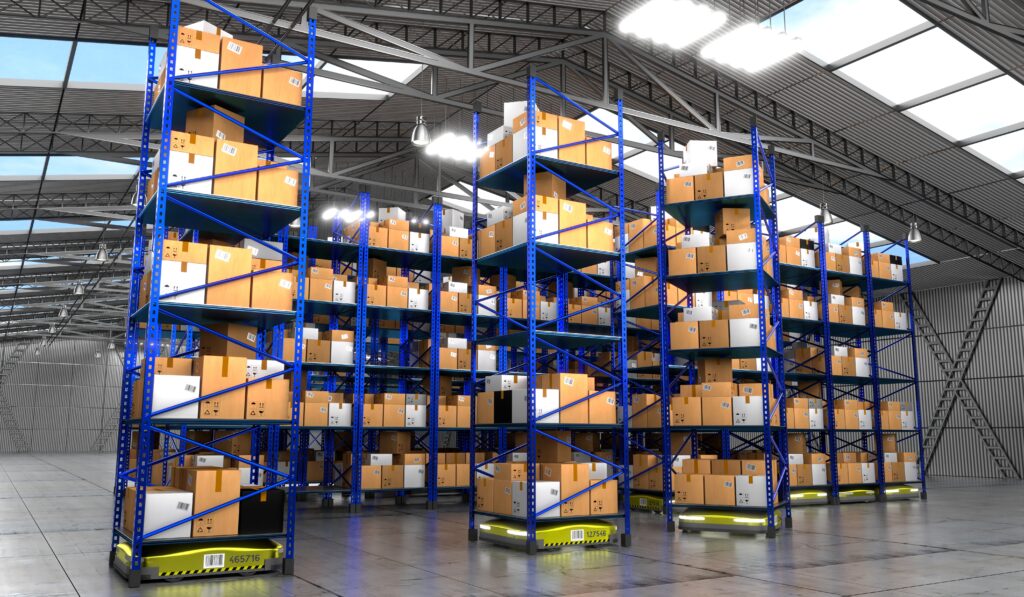
This is a trend we are monitoring very closely at 7R, because the automation of production processes—both on-site, that is, within our physical facilities, and here in the office, specifically regarding sales, leasing, and the management of this facility’s capital—is of great importance. In my opinion, automation will advance significantly within the buildings themselves. We are talking here about various types of storage systems, systems that allow easier access to a given product. However, the specialization and automation required to serve this market—meaning leasing or sales—will be limited to the most repetitive segments. Leasing and sales transactions have such a unique character and sophisticated structure—especially in the Polish context and within this legal jurisdiction—that this element of spontaneity and negotiation will always be important for warehouses and processes. However, the sale and the handling of the entire lease-sale process are rather human-driven.
The past few years have seen rapid growth in warehouse space in Poland. We have surpassed twenty million square meters. We will likely exceed twenty-five million soon. Where is the limit? Is it thirty, thirty-five, or forty million square meters? What is the Polish market’s capacity to absorb this space?
From the developer’s perspective, it would be best if this boundary did not exist, but we have to be realistic. This limit can be managed in a certain way. As we observe mature markets—the markets of Western Europe, where the supply is much more diversified, because there are both older and modern facilities. In Poland, the total supply of facilities is mainly focused on modern facilities—the so-called A-class buildings, the prime buildings. At the moment, we are actually reaching a stock of twenty-four million square meters. In terms of Poland’s population, this amounts to less than one square meter—0.6 square meters per capita. If we compare the Polish market to the German market, which has over seventy million square meters—actually, over seventy-two million square meters—this figure increases significantly.
It means that every person in the country should have their own space in the warehouse.
Definitely yes. Whether it’s a basement or a 7R warehouse—absolutely yes.
As the warehouse market developed, new locations also emerged. At first, there was central Poland—Warsaw, Silesia, Wrocław, Poznań, and Pomerania—these are the obvious ones. Where else can we expect this—let’s not be afraid to call it—invasion of warehouses?
Warehouses are everywhere—and I say this with full awareness when it comes to Poland. The markets we call key markets—the so-called core markets. In fact, central Poland, Poznań, Wrocław—the major cities. However, we are seeing a very interesting development and evolution of the so-called core-plus markets. Take Szczecin, for example. It is a very dynamic market, and we are seeing significant growth. This is not only due to its geography or proximity to Germany and Scandinavia, but also to its highly specialized workforce. An interesting example is the entire corridor along the S3 route—that is, along our western border—where some production chains are actually located. And companies also benefit from the advantage of a cheaper workforce. On the other hand, eastern Poland offers great opportunities. Here, as 7R, we are present in Lublin. We have a very strong presence in Rzeszów. I think we still have a lot to do in this region.
East, West, North, and South of Poland. The warehouses are primarily focused on road transportation. Is there a possibility that the intermodal segment, which currently exists in Poland only to a limited extent, will also develop?
It is here that we touch upon a very interesting subject, because when we look at warehouses, we should be looking at infrastructure. Not at buildings that are disconnected and scattered across the map of Poland. On the contrary, they form a coherent network—an infrastructure network. If we add intermodal transport to this—specifically, the potential for transshipment from river or rail transport—a very interesting picture emerges. Are we ready for this? This is a very good question, because at the moment most transport actually takes place on Polish roads. Investments are also moving in this direction. The growth of the road network in Poland is very impressive. Especially when we compare 2006, when there were only 930 kilometers of expressways and freeways in total, to 2020, when the total is 4,300 kilometers. You can see that the emphasis is placed there. Personally, I am a supporter of intermodal transport and I would like logistics to develop in this direction.
Let’s hope so. The pandemic is starting to wind down, though opinions on the matter vary. How will this affect the warehouse market—demand, perhaps supply, or perhaps the growth of e-commerce? We also need to set a limit on the Polish market’s absorption capacity. My question is: What should we prepare for if the warehouse market cools off?
If the temperature in the warehouse market drops, I believe that both investors and developers who deliver a refined, high-quality product will come out on top. In that case, potential buyers will become more selective. They will pay attention not only to the quality of the product, not only to the rental rate, and not only to the location. These are important, key factors. However, on top of all this, they will also consider the service provided throughout the entire leasing process, the sales service, and the more intangible impression resulting from this human factor. So the winners will be those companies—those companies that have professionals capable of efficiently managing both the leasing process for this property and the sales process.
Thank you very much for the interview. Our guest today was Tomasz Kostrzewa, Senior Investment Director at 7R.
Thank you very much.